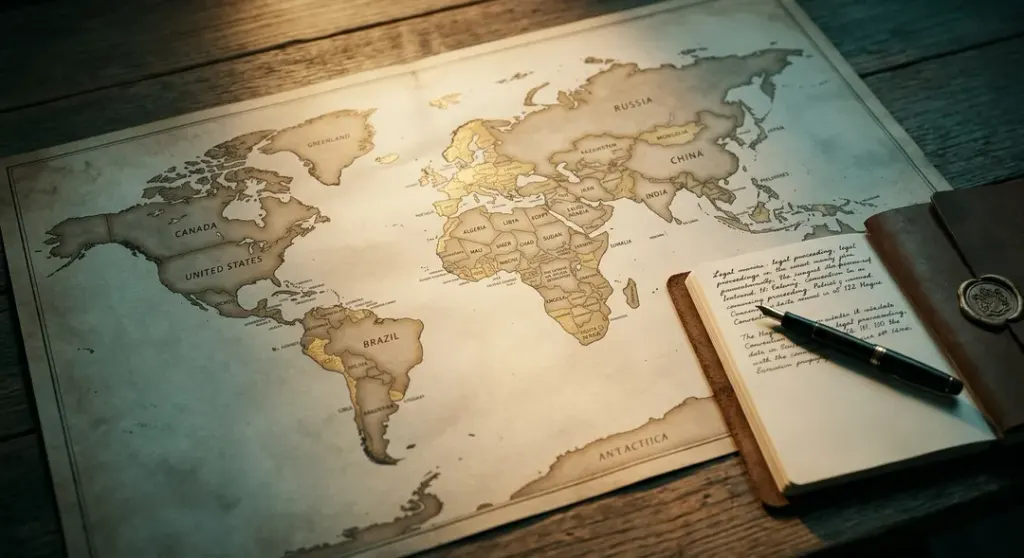
Is a Danish Marriage Recognised in My Country? Official Rules for 14 Countries and the EU
Reviewed by Ludmila Bernowski, CEO & Co-Founder of Denmark Wedding Services. Last reviewed: November 2026. Practical, experience-based information, not legal advice — for legal questions, consult a qualified lawyer. Our Google Business Profile and reviews
Short answer: There is no single answer for every country. A marriage concluded in Denmark is valid under Danish law; recognition and legal effects abroad depend on the destination country. Most countries in our table accept a marriage that was valid where it was concluded, with their own conditions. Several also ask you to report or register it at home, and outside the EU the Danish certificate usually needs an apostille.
On this page
- Is a Danish marriage recognised in every country?
- Recognition by country: the table
- Germany, Austria and Switzerland: what is different?
- Does an apostille make my marriage recognised?
- Can we register a Danish marriage in the UK?
- Is a Danish marriage accepted in the US and Canada?
- What about Australia and New Zealand?
- Russia, Ukraine and Türkiye: which steps are required?
- India, the Philippines, China and Brazil: what happens after the wedding?
- Is a same-sex marriage from Denmark recognised?
- What should we check before the wedding?
- How does Denmark Wedding Services help?
- Frequently asked questions about recognition abroad
Who this guide is for: Couples who plan to marry in Denmark, or already have, and want to know before or after the wedding what their home country says about it. It is a reference table with an official source for every row. The detailed steps for each country are in the linked guides.
Key points
- The marriage is valid under Danish law; recognition and legal effects abroad depend on the destination country.
- Each country decides by its own law, usually by the "valid where concluded" principle with exceptions, for example an existing marriage or close kinship.
- Some countries oblige you to report the marriage (Austria, Switzerland, Russia, Türkiye); in others registration is optional or not possible (Germany, India, the UK).
- An apostille only confirms that the Danish certificate is genuine. It does not make the marriage recognised.
- Inside the EU the Danish marriage certificate needs no apostille (Regulation (EU) 2016/1191). Countries outside the Hague Apostille Convention need legalisation instead.
- Same-sex marriages are treated very differently from country to country.
Is a Danish marriage recognised in every country?
No country-independent answer exists, and nobody can promise one. Denmark marries you under Danish law after the Danish Agency of Family Law (Familieretshuset) has approved the application, and both partners attend the ceremony in person. Whether another country gives that marriage legal effect is decided by that country's law and, often, by the individual office you deal with.
What helps: most countries in the table below apply the principle that a marriage valid where it was concluded is valid at home too, as long as no impediment of their own law applies.
Recognition by country: the table
Read on 23 November 2026. "Apostille" means the apostille on the finished Danish marriage certificate, not the one on your own documents before the application.
| Country | Rule on recognition | Report or register at home? | Danish certificate |
|---|---|---|---|
| Germany | Valid in principle if the Danish form was followed and each partner met their own national law (Art. 11, 13 EGBGB) | Registration optional (§ 34 PStG); residents update the Bürgeramt | No apostille (EU) |
| Austria | Validity is checked case by case | Austrian citizens are legally obliged to report it, at a registry office or an Austrian embassy | No apostille (EU) |
| Switzerland | A marriage validly concluded abroad is recognised (Art. 45 IPRG) | Must be reported to a Swiss representation; originals no older than 6 months | Ask the office |
| Other EU countries | Each country's own law | Each country's own rules | No apostille (EU) |
| United Kingdom | Recognised if lawful where it took place and allowed under UK law | Not possible: only UK marriages are registered | Ask the office |
| United States | USCIS: validity follows the law of the place of celebration, with exceptions | No registration step for USCIS; the certificate is the proof | Apostille if asked |
| Canada | Usually valid; for IRCC, valid where performed and in Canada, both partners present | Not needed | Apostille if asked |
| Australia | Part VA of the Marriage Act generally recognises overseas marriages valid where solemnised | Check with the authority | Apostille if asked |
| Russia | Recognised unless an impediment of Art. 14 Family Code applies (Art. 158) | Notice to a ZAGS or consulate within one month | Apostille + notarised Russian translation |
| Ukraine | Valid if no ground of invalidity of the Ukrainian Family Code applies (Art. 58, Law on PIL) | The civil registry office (РАЦС) decides which documents it wants | Apostille + Ukrainian translation |
| India | Foreign Marriage Act 1969 allows registration of a marriage solemnised abroad | Optional, at an Indian mission (s. 17) | Ask the mission |
| Philippines | Reported as a Report of Marriage to the Philippine Statistics Authority | Report of Marriage at the Philippine embassy; after one year, delayed registration | Ask the embassy |
| Türkiye | Turkish citizens may marry before a foreign authority (Marriage Regulation, Art. 11) | Hand the document to a Turkish consulate within 30 days | Apostille if asked |
| China | Formalities are valid if they follow the law of the place of marriage (Art. 22) | Ask the authority that needs it | Apostille; Chinese translation may be asked |
| Brazil | A marriage before a foreign authority is valid | Register at a Brazilian consulate, then transcribe at a cartório in Brazil | Ask the consulate |
Not in the table: countries that are not parties to the Hague Apostille Convention, such as the United Arab Emirates, Egypt, Qatar, Iran and Iraq. There, an apostille is not accepted and the Danish certificate needs legalisation through the embassy of the destination country. Thailand joins the Convention on 28 February 2027 according to the HCCH; until then the same applies.
Germany, Austria and Switzerland: what is different?
Germany has no recognition procedure: each office checks the marriage when its own decision depends on it. Registration in the German marriage register is voluntary and only possible if at least one spouse is German. Details in recognition of a Danish marriage in Germany.
Austria checks validity case by case, according to the official portal oesterreich.gv.at, and Austrian citizens are legally obliged to report changes in their civil status abroad, at an Austrian registry office or through an Austrian embassy or consulate. More in a Danish marriage in Austria.
Switzerland recognises a marriage validly concluded abroad, but does not learn of it automatically: you report it to a Swiss representation, with original documents no older than six months. The procedure is free of charge. More in a Danish marriage in Switzerland.
Does an apostille make my marriage recognised?
No. An apostille confirms that the signature and seal on the Danish marriage certificate come from a competent Danish authority. Whether the marriage has legal effects in your country is a separate question of that country's law.
Inside the EU, a marriage certificate from another EU country must be accepted without an apostille under Regulation (EU) 2016/1191; some offices still ask, so check with yours. Outside the EU, the apostille is the usual form in countries that have joined the Hague Apostille Convention. According to the Danish Ministry of Foreign Affairs, documents sent by post or courier are processed in 5–7 working days, and scans, copies or printouts are not accepted. How it works is explained in the apostille on a Danish marriage certificate.
Can we register a Danish marriage in the UK?
No. According to GOV.UK, only UK marriages are registered in the UK, and you cannot get a UK marriage certificate for a marriage that happened abroad. A foreign marriage is recognised in the UK if it was lawful in the country where it took place and would be allowed under UK law. Your Danish certificate remains the record. For UK couples, see also Denmark vs the UK after Brexit.
Is a Danish marriage accepted in the US and Canada?
For US immigration, the USCIS Policy Manual applies the place-of-celebration rule: the validity of a marriage is determined by the law of the place where it was celebrated, with exceptions such as polygamous marriages. State matters, such as property or a later divorce, follow the law of your state. More in marrying an American partner in Denmark.
For Canada, the Government of Canada says that marriages legally performed in a foreign country are usually valid in Canada and do not need to be registered there. For spousal sponsorship, IRCC requires a marriage legally recognised where it took place and in Canada, and it does not recognise marriages where one or both partners were not physically present. A Danish town-hall wedding has both of you in the room. More in Canadian citizens marrying in Denmark.
What about Australia and New Zealand?
Part VA of Australia's Marriage Act 1961 (s 88E) generally recognises marriages solemnised overseas that are valid under the law of the country where they took place; since 9 December 2017 this includes same-sex marriages. Ask the Australian authority you deal with which form of the certificate it wants. New Zealand is covered in Australian and New Zealand citizens marrying in Denmark.
Russia, Ukraine and Türkiye: which steps are required?
- Russia: Article 158 of the Family Code recognises the marriage unless an impediment under Article 14 applies, such as an existing marriage. The Russian spouse sends information to a ZAGS office or a Russian consulate within one month, and Russian offices need the Danish certificate with an apostille and a notarised Russian translation. Step by step: is a Danish marriage recognised in Russia.
- Ukraine: under Article 58 of the Law on Private International Law, the marriage is valid if no ground of invalidity of the Ukrainian Family Code applies to the Ukrainian partner. The Danish certificate needs an apostille and a Ukrainian translation, and the local civil registry office (РАЦС) decides which documents it wants. More in marrying a Ukrainian partner in Denmark.
- Türkiye: under Article 11 of the Turkish Marriage Regulation, the document from the foreign authority goes to the nearest Turkish consulate no later than 30 days after the wedding. More in marrying a Turkish partner in Denmark.
India, the Philippines, China and Brazil: what happens after the wedding?
- India: under section 17 of the Foreign Marriage Act 1969, an Indian Marriage Officer at an Indian mission may register a marriage solemnised abroad if one partner is Indian and the couple applies. It is optional, and missions set their own conditions. More in marrying an Indian partner in Denmark.
- Philippines: the Filipino spouse files a Report of Marriage with the Philippine embassy so that it is recorded with the Philippine Statistics Authority. Embassies treat a report filed more than a year after the wedding as a delayed registration. More in marrying a Filipino partner in Denmark.
- China: under Article 22 of the PRC Law on the Application of Laws to Foreign-Related Civil Relations, the formalities of a marriage are valid if they follow the law of the place where it was concluded. For mainland China a Danish apostille replaced consular legalisation on 7 November 2023. More in marrying a Chinese partner in Denmark.
- Brazil: according to the Brazilian government portal, a marriage before a foreign authority is valid, but to have legal effect in Brazil it is registered at a Brazilian consular post and then transcribed at the Cartório do 1º Ofício of the spouse's home municipality. More in marrying a Latin American partner in Denmark.
Is a same-sex marriage from Denmark recognised?
It depends strongly on the country. Germany allows marriage between two people of the same sex (§ 1353 BGB), Canada's IRCC defines a spouse as either of two people of opposite or same gender, and Australia has recognised overseas same-sex marriages since 9 December 2017. Russia does not recognise same-sex marriages; its constitution protects marriage as a union of a man and a woman. Chinese law provides for marriage between a man and a woman only. For every other country, ask the authority before you rely on the marriage. More in same-sex marriage in Denmark.
What should we check before the wedding?
- Find the row for each partner's country and open the official source.
- Ask the office at home (registry office, consulate, embassy) for its current document list and whether it wants an apostille or a translation of the Danish certificate.
- Note any deadlines: one month for Russia, 30 days for Türkiye, six months for a Swiss name declaration.
- Plan the apostille straight after the wedding if a deadline applies.
What the Danish certificate shows and how to get more copies is in the Danish marriage certificate explained. All next steps after the ceremony are collected in married in Denmark: what next. The video on this page shows the apostille step.
How does Denmark Wedding Services help?
We handle the Danish side so the marriage rests on sound paperwork from the start. With the €799.00 Comfort Package we check your documents, file the application with Familieretshuset, reserve the ceremony date in the Danish kommune you choose and provide two witnesses. The official 2,100 DKK fee (2026) is included in our package. You pay only after our team has checked your documents and confirmed that everything is complete.
After the wedding you receive the Danish marriage certificate, issued in Danish, English, German, French and Spanish. If your country wants an apostille on it, our Apostille Service arranges it for €100, also after you have left Denmark. Registration at home is something you do yourselves with your own authorities; we do not guarantee recognition in any country. Your personal document list comes from the free checklist.
Denmark Wedding Services is not a law firm. We provide practical and administrative support for marrying in Denmark; for questions about recognition, registration, names or residence in your country, please ask the relevant authority or a qualified legal professional.
Written by Ludmila Bernowski, CEO & Co-Founder of Denmark Wedding Services, state-authorised sworn translator for Russian and German; reviewed by Shenol Reetz, co-founder. Last reviewed: 23 November 2026.
Frequently asked questions about recognition abroad
Is a Danish marriage recognised in every country?
There is no single answer for every country. The marriage is valid under Danish law; recognition and legal effects abroad depend on the destination country. Most countries accept a marriage that was valid where it was concluded, with their own conditions.
Does an apostille make my marriage recognised?
No. An apostille only confirms that the signature and seal on the Danish certificate are genuine. Whether the marriage has legal effects is decided by the law of your country.
Can we register a Danish marriage in the UK?
No. Only UK marriages are registered in the UK. A foreign marriage is recognised if it was lawful where it took place and would be allowed under UK law; the Danish certificate remains the record.
Do we need an apostille inside the EU?
Usually not. Under Regulation (EU) 2016/1191 a marriage certificate from another EU country must be accepted without an apostille. Some offices still ask, so check with yours.
Which countries need legalisation instead of an apostille?
Countries that are not parties to the Hague Apostille Convention, such as the United Arab Emirates, Egypt, Qatar, Iran and Iraq. There the Danish certificate is legalised through the embassy of the destination country.
How long does the Danish apostille take?
The Danish Ministry of Foreign Affairs states 5–7 working days for documents received by post or courier, and longer in busy periods. DWS arranges it through the Apostille Service for €100.
Sources
- Gesetze im Internet: EGBGB, Articles 11 and 13 (German) (read 2026-11-23)
- Gesetze im Internet: § 34 PStG, marriages abroad (German) (read 2026-11-23)
- Gesetze im Internet: § 1353 BGB (German) (read 2026-11-23)
- oesterreich.gv.at: registering a marriage and validity of a marriage concluded outside Austria (German) (read 2026-11-23)
- Swiss Embassy in Denmark: after the wedding, registering the marriage abroad (German) (read 2026-11-23)
- Canton of Zurich: civil-status events abroad (German) (read 2026-11-23)
- Federal Office of Justice: FAQ name, first names, citizenship (German) (read 2026-11-23)
- Fedlex: Federal Act on Private International Law (IPRG), SR 291 (read 2026-11-23)
- Your Europe: getting your public documents accepted in the EU (read 2026-11-23)
- GOV.UK: register your marriage or civil partnership abroad (read 2026-11-23)
- USCIS Policy Manual, Volume 12, Part G, Chapter 2 (read 2026-11-23)
- Government of Canada: marriage overseas (read 2026-11-23)
- IRCC: Guide 5289, sponsor your spouse or partner (read 2026-11-23)
- Federal Register of Legislation: Marriage Act 1961, Part VA, s 88E (read 2026-11-24)
- Federal Register of Legislation: Marriage Act 1961, Part VA (read 2026-11-23)
- Family Code of the Russian Federation, Article 158 (in Russian) (read 2026-11-23)
- Federal Law No. 143-FZ on civil-status acts, Article 13.1 (in Russian) (read 2026-11-23)
- Government of Ukraine: Ministry of Justice explainer on marriages concluded abroad, 23 April 2026 (in Ukrainian) (read 2026-11-23)
- Danish Embassy in Ukraine: marriage (read 2026-11-23)
- India Code: The Foreign Marriage Act, 1969 (read 2026-11-23)
- Embassy of the Philippines in Berlin: Report of Marriage (read 2026-11-23)
- Turkish Marriage Regulation (Evlendirme Yönetmeliği), Article 11 (in Turkish) (read 2026-11-23)
- PRC Law on the Application of Laws to Foreign-Related Civil Relations, Article 22 (WIPO Lex, in Chinese) (read 2026-11-23)
- Government of Brazil: registering a marriage abroad (in Portuguese) (read 2026-11-23)
- HCCH: status table of the Apostille Convention (read 2026-11-23)
- Ministry of Foreign Affairs of Denmark: legalisation of Danish marriage certificates (read 2026-11-23)
- City of Copenhagen: get a new marriage certificate, international version (read 2026-11-23)
Watch Our Video
Follow us on YouTube, Instagram & TikTok for more wedding tips
Ready to Start Your Danish Wedding?
Fill out our free checklist in about 2 minutes — we'll send you a personalized document list and guide you through every step.
Start Free Checklist →