UK–EU Couples After Brexit: Marry in Denmark or the UK?
Reviewed by Ludmila Bernowski, CEO & Co-Founder of Denmark Wedding Services. Last reviewed: October 2026. Practical, experience-based information, not legal advice — for legal questions, consult a qualified lawyer. Our Google Business Profile and reviews
Short answer: A British citizen and an EU partner can marry in Denmark without a certificate of no impediment, a marriage visa or a UK notice period. Complete applications take about 5 working days (a target, not a guarantee). A Danish wedding does not replace a UK partner visa: to live in the UK, you need one wherever you marry.
On this page
- What changed for British–EU couples after Brexit?
- When does marrying in the UK make sense?
- When is marrying in Denmark the better choice?
- Can two British citizens marry in Denmark?
- How do costs and timelines compare?
- Is a Danish marriage recognised in the UK and the EU?
- Which route fits your plans?
- What have we learned from helping international couples?
- What are the next steps for British–EU couples?
- Frequently Asked Questions: Marrying a British Partner After Brexit
Who this guide is for: British citizens with an EU partner, and EU citizens with a British partner, who want to marry after Brexit and are deciding where — the UK, Denmark or the EU partner's home country — and what applies afterwards if you live in the UK or in the EU. Two British citizens who want to marry in Denmark will find a short answer for their case below.
Key points
- Since Brexit, British citizens are non-EU nationals in the EU, and EU citizens other than Irish citizens who move to the UK now need a UK visa: free movement between the two has ended for new couples.
- To marry in Denmark, the British partner needs no visa and, as a rule, no apostille on UK documents, but does need proof of lawful stay.
- To marry in the UK, a partner without British or Irish citizenship or EU Settlement Scheme status usually needs a Marriage Visitor visa (£135), and notice must be given at least 29 days before the ceremony.
- To live in the UK, you need a partner visa wherever you marry: £2,064 application fee from outside the UK, the Immigration Health Surcharge and usually at least £29,000 combined yearly income.
- A Danish marriage is recognised in the UK if it was lawful in Denmark and would be allowed under UK law, and it is generally recognised in other EU countries.
Before Brexit, a British–EU wedding was mostly a question of where to celebrate. Today more depends on it: visas, income requirements and where you are allowed to live together afterwards. This guide compares the three realistic routes — the UK, Denmark and the EU partner's home country — with figures we checked on gov.uk and with the Danish authorities. It is not individual legal advice, but it shows which questions to settle before you decide. For the general requirements and process, see our guide to marrying in Denmark as an international couple.
What changed for British–EU couples after Brexit?
Free movement between the UK and the EU ended with the transition period on 31 December 2020. Before that, an EU citizen could simply move to the UK under free movement, and a British citizen could settle in any EU country with their partner. For couples who met later, or who only now want to live together, this means:
- British partner in the EU: a non-EU national. Short stays in the Schengen area are visa-free — at most 90 days in any 180-day period, recorded in the EU Entry/Exit System (EES). A longer stay needs a residence permit.
- EU partner in the UK: anyone other than an Irish citizen who did not live in the UK before 1 January 2021 and has no EU Settlement Scheme status needs a UK visa to live there, usually the partner (family) visa.
- Couples who already lived in the other country before 2021: often have rights under the Withdrawal Agreement — in the UK through the EU Settlement Scheme, in the EU through the residence status the host country granted to British nationals.
Where you marry is therefore closely tied to where you want to live. The wedding itself is the smaller step anywhere; the cost and the waiting come with the right to live together.
When does marrying in the UK make sense?
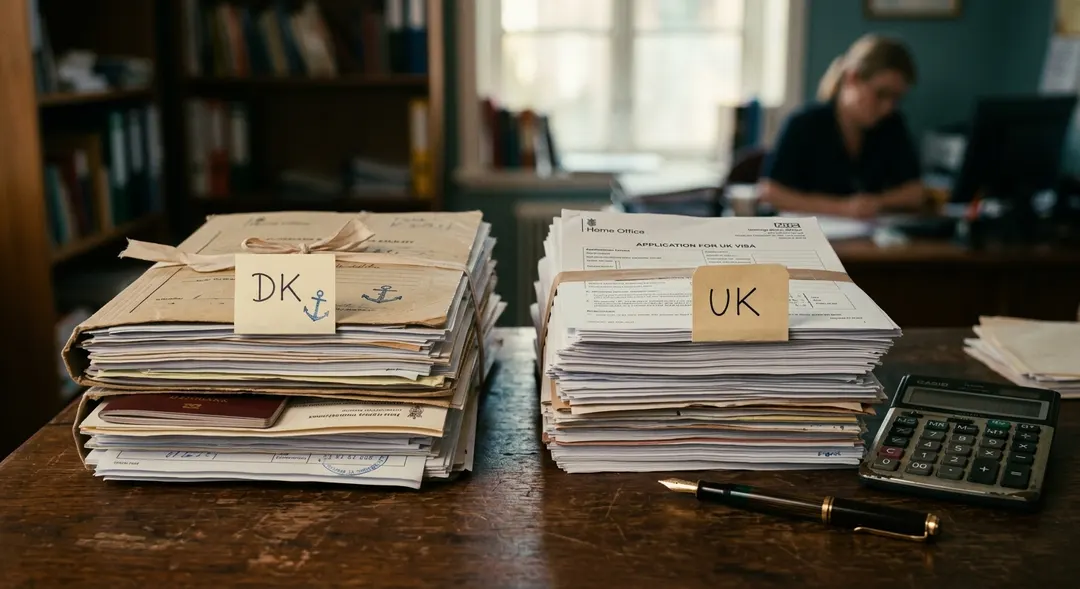
A register office wedding makes sense if you plan to live in the UK permanently anyway, the British partner has a stable UK income and you can budget for the immigration costs. For an EU partner without UK status, gov.uk sets out the following (as of September 2026):
Marrying in the UK as a visitor
- Marriage Visitor visa: needed to give notice or marry in the UK unless you are British or Irish, have indefinite leave to remain, have settled or pre-settled status under the EU Settlement Scheme (or applied by 30 June 2021 and are still waiting for a decision), or are already in the UK on a visa of more than 6 months. It costs £135, and a decision usually comes within 3 weeks of your appointment.
- Notice: you must give notice at least 29 days before the ceremony. A registrar at a register office costs £62 in England and Wales, plus the fee for giving notice.
- Home Office check: if a partner gives notice without the right visa, the Home Office is told. If it asks questions about you and your relationship, you may have to wait up to 70 days before you can marry.
- No right to live in the UK: the Marriage Visitor visa allows a stay of up to 6 months, but it cannot be extended or switched to another visa.
Living in the UK afterwards: the partner visa
- Application fee: £2,064 when applying from outside the UK, £1,407 from inside the UK.
- Immigration Health Surcharge: £3,105 per adult for a visa of 2 years and 9 months.
- Income: applications made since 11 April 2024 usually need at least £29,000 combined yearly income; in some cases savings can count.
- English: at least level A1. EU citizens are not exempt by nationality — Maltese citizens are the exception — but a degree taught in English can count as evidence.
- Timeline: from outside the UK, a decision usually comes within 12 weeks. The first visa lasts up to 2 years and 9 months, an extension up to 2 years and 6 months; indefinite leave to remain is possible after 5 years' continuous residence as a partner.
Important: these costs arise because you want to live in the UK, not because of where you marry. A couple who marries in Denmark and then moves to the UK needs exactly the same partner visa.
Partner visa hurdles beyond the fees
Beyond the application fee, the Immigration Health Surcharge and the income threshold, the UK partner visa also requires English at level A1 or higher, an appointment for fingerprints and a photo, and an extension before indefinite leave to remain becomes possible after 5 years (gov.uk, as of September 2026). Marrying in Denmark itself involves none of these, but the marriage on its own does not give either partner a right to live anywhere.
When is marrying in Denmark the better choice?
Denmark is the natural choice if you plan to live in the EU, or simply want the wedding done without UK visa steps. Denmark requires no certificate of no impediment, no residence in Denmark and no marriage visa for British citizens. Instead, Familieretshuset, the Danish Agency of Family Law, checks identity, marital status, lawful stay and the relationship. Complete applications are generally approved in about 5 working days after the complete application has been submitted to Familieretshuset — a general target, not a guarantee. The approval is valid for 4 months.
Does the British partner need a visa?
No. British citizens can visit the Schengen area visa-free for short stays — at most 90 days in any 180-day period. Since the EES started on 10 April 2026, passports are no longer stamped; proof of lawful stay is your boarding pass or e-ticket showing the entry date, and we also ask you to upload the result of the official EU calculator "Check how long you can stay". If the British partner lives in an EU country, a copy of the residence permit is enough.
What does the British partner need?
- Passport: colour copies of all pages.
- Proof of address and civil status: not older than 3 months. Your personal checklist names the right document for your situation, whether you live in the UK or in the EU.
- Previous marriage: the final order (called decree absolute before April 2022).
- Apostille: Familieretshuset usually does not ask for an apostille on UK documents, and a passport never needs one. We check your documents and tell you if your case is an exception.
- Lawful stay: if you travel from the UK, your boarding pass or e-ticket as proof of the entry date (plus the EES calculator result we ask for); if you live in the EU, a copy of your residence permit or residence document.
- Supporting your relationship (requested by DWS): photos together, travel tickets, message history — not needed if you have children together. Familieretshuset asks about your relationship and may request photos if it is not documented well enough.
The full list is in our guide to the documents for a Danish wedding.
What does the EU partner need?
Usually just a passport or national identity card and proof of address and civil status, not older than 3 months. Documents in Danish, English or German are accepted without translation; documents in other languages need an authorised translation into one of these. If the non-British partner is not an EU citizen, they also need a lawful stay in Denmark (visa-free entry, a Schengen visa, or a residence permit from Denmark or another Schengen country — a permit from an EU country outside Schengen, such as Ireland, is not enough), and documents from some countries need an apostille — we check this for your specific documents.
The ceremony takes place at a town hall, in Danish, English or German depending on the town hall. For the ceremony itself, read about getting married in Copenhagen, in Aabenraa or in Tønder near the German border. For entry rules in other situations, see our guide to visa requirements for marrying in Denmark.
And the EU partner's home country?
You can also marry in the EU partner's country. The rules differ from country to country; most ask the British partner for documents proving that they are free to marry, and gov.uk explains which UK documents exist for this. Collecting, translating and authenticating them can take a while. German–British couples will find the German route compared in detail in marrying in Denmark or Germany.
Can two British citizens marry in Denmark?
Yes. Two British citizens marry in Denmark under the same rules: both enter visa-free for up to 90 days in any 180-day period, keep the boarding pass as proof of the entry date and need no certificate of no impediment. UK documents usually need no apostille. The marriage is recognised in the UK if it was lawful in Denmark and would be allowed under UK law. There is no UK certificate for it, and UK offices may ask for an apostille on the Danish certificate (our Apostille Service: €100). Because neither of you needs a UK visa, the Marriage Visitor visa and partner visa sections of this guide do not apply to you.
How do costs and timelines compare?
This overview deliberately separates getting married from living together afterwards (as of September 2026; UK figures from gov.uk):
| Denmark with DWS | UK register office | EU partner's home country | |
|---|---|---|---|
| Getting married: fees | €799.00 Comfort Package incl. Danish authority fees | £62 registrar plus notice fees; Marriage Visitor visa £135 for a partner without UK status | depends on the country, plus document and translation costs |
| Certificate of no impediment | not needed | not needed; documents checked when you give notice | usually proof that the British partner is free to marry |
| Lead time | approval about 5 working days, then a ceremony date | visa usually within 3 weeks; notice at least 29 days before, up to 70 days if the Home Office investigates | depends on the country |
| Living in the UK afterwards | partner visa needed | partner visa needed | partner visa needed |
| Living in the EU afterwards | EU rules in another EU country; national rules in the EU partner's own country | EU rules in another EU country; national rules in the EU partner's own country | EU rules in another EU country; national rules in the EU partner's own country |
The partner visa costs the same on every route: £2,064 from outside the UK plus £3,105 Immigration Health Surcharge, and usually at least £29,000 combined income. With the Danish route, add travel, accommodation and food; optionally, the apostille on the marriage certificate costs €100. The Comfort Package covers the Familieretshuset application including the Danish authority fees, the document check, the ceremony booking and two witnesses at the town hall (included). For a full breakdown including travel, see what a wedding in Denmark costs.
In short: marrying in Denmark saves a partner without UK status the Marriage Visitor visa (£135) and the UK notice period of at least 29 days. It does not save the partner-visa costs if you later move to the UK.
Want to check your documents first? The free document checklist shows exactly what you and your partner need.
Is a Danish marriage recognised in the UK and the EU?
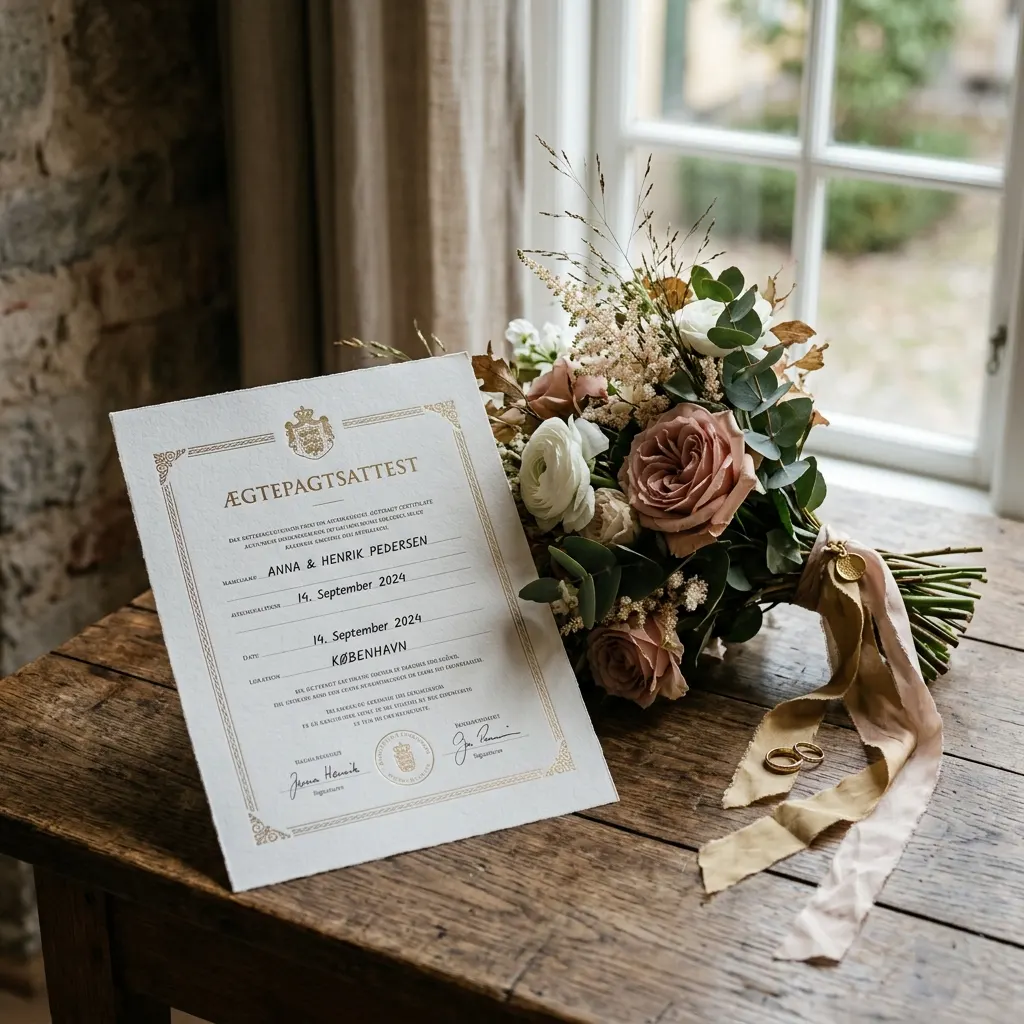
In the UK: according to gov.uk, a marriage abroad is recognised if it was lawful in the country where it took place and would be allowed under UK law. There is no UK marriage certificate for marriages abroad; only marriages that take place in the UK are registered there. Your Danish marriage certificate is issued in five languages, including English. As the UK is no longer covered by EU Regulation 2016/1191, UK authorities may ask for an apostille on the Danish certificate; our Apostille Service costs €100. What it confirms and how long it takes is explained in our guide to the apostille on a Danish marriage certificate.
In the EU: a marriage lawfully performed in Denmark is generally recognised in other EU countries. Under EU Regulation 2016/1191, civil-status documents such as a Danish marriage certificate need no apostille for the authorities of other EU countries; because some offices still ask for one, check with the registry office in your country first.
Where can you live together after the wedding?
- In another EU country: if the EU partner moves to an EU country other than their own, the British spouse can rely on EU free-movement rules (Directive 2004/38/EC) and applies for a residence document there, generally within 3 months of arriving.
- In the EU partner's own country: EU free movement does not apply; the national rules for spouses of that country's citizens do. Check the requirements with that country's immigration authority.
- In the UK: the Danish marriage counts as a marriage recognised in the UK, but it does not replace the partner visa with all the requirements above.
Which route fits your plans?
Three typical situations show how the decision shifts — they are examples, not individual advice:
- You live together in the EU partner's country: the British partner already has a residence permit there or is moving in. Much speaks for Denmark here: no certificate of no impediment, no visa and a manageable lead time. The right to stay afterwards follows that country's national rules.
- You plan to live in another EU country: with the Danish marriage certificate, the British spouse of an EU citizen who moves to another EU country can apply for a residence card there under EU law. The UK partner visa plays no role.
- You want to live in the UK permanently: then there is no way around the partner visa. Denmark can still make sense if you want to marry first without a Marriage Visitor visa and the UK notice period, but the income and English requirements stay the same.
For couples with partners from other countries, read our guide to marrying a non-EU partner in Denmark.
What have we learned from helping international couples?
We help couples from many countries marry in Copenhagen, Aabenraa and Tønder; our founder Ludmila Bernowski married in Denmark as part of a binational couple herself in 2018. For British–EU couples, a few practical lessons stand out:
- Settle the residence question first: many couples compare wedding locations, although the real hurdle is the right to live together afterwards. Decide where you want to live first.
- Clarity before submission: what couples value most is a checked document list before anything is submitted. No one can promise a processing time — about 5 working days is Familieretshuset's general target — but a complete application avoids the usual follow-up questions.
- Have UK documents ready early: Familieretshuset usually needs no apostille on UK documents. If you are divorced and do not have the final order at hand, order a copy in good time.
- Watch your Schengen days: if the British partner spends a lot of time in the Schengen area, check with the EES calculator before travelling that the 90 days cover the ceremony date.
- Choose the ceremony language: depending on the town hall, the ceremony can be held in English or German, so both partners understand every word without an interpreter.
- Signatures by hand: the three forms we send you pre-filled — service contract, power of attorney and declaration of truth — are signed by hand by both partners; Familieretshuset requires original signatures on the power of attorney and the declaration of truth.
What are the next steps for British–EU couples?
Register office, the EU partner's home country or a Danish town hall: what matters is where you want to live, your timeline and your budget. If you plan to live in the EU, Denmark is a manageable route to a legally valid marriage for many British–EU couples.
With the Comfort Package for €799.00, we check your documents, submit the application to Familieretshuset including the Danish authority fees, book the ceremony date and provide two witnesses. Our AI wedding assistant answers questions around the clock, and you can reach us personally through the contact form. The first step is the free checklist with your personal document list.
Frequently Asked Questions: Marrying a British Partner After Brexit
Is a marriage in Denmark valid in the UK?
Yes. According to gov.uk, a marriage abroad is recognised in the UK if it was lawful in the country where it took place and would be allowed under UK law. You do not receive a UK marriage certificate, because only marriages that take place in the UK are registered there. UK authorities may ask for an apostille on the Danish certificate.
Can we live in the UK after marrying in Denmark?
Yes, but only with a UK partner visa. The Danish marriage counts as a recognised marriage, but it replaces none of the requirements: usually at least £29,000 combined yearly income, English at level A1, a £2,064 application fee from outside the UK plus the Immigration Health Surcharge (as of September 2026, according to gov.uk). Denmark only saves a partner without UK status the Marriage Visitor visa (£135) and the UK notice period of at least 29 days.
Will the UK accept a Danish marriage certificate for a later partner visa?
Yes. For the partner visa you must prove a marriage recognised in the UK, and a marriage lawfully performed in Denmark is recognised there. If you move to the UK only years later, the Danish certificate still serves as proof, but you must meet the income and English requirements that apply at the time of your application.
Does my British partner need a visa to marry in Denmark?
No. British citizens can visit the Schengen area visa-free for short stays, at most 90 days in any 180-day period. Proof of lawful stay is the boarding pass or e-ticket showing the entry date; we also ask for the result of the EU's EES calculator. If your partner already lives in an EU country, a copy of the residence permit or residence document is enough.
Can two British citizens marry in Denmark?
Yes. Both partners enter visa-free for up to 90 days in any 180-day period, keep the boarding pass as proof of the entry date and need no certificate of no impediment. UK documents usually need no apostille. The marriage is recognised in the UK if it was lawful in Denmark and would be allowed under UK law. There is no UK certificate for it, and UK offices may ask for an apostille on the Danish certificate (our Apostille Service: €100).
Which documents does a British citizen need to marry in Denmark?
Usually the passport, proof of address and civil status (not older than 3 months), the final order after a previous marriage, proof of lawful stay and, at our request, material supporting your relationship. Familieretshuset usually asks for no apostille on UK documents, and never for the passport. Documents in English are accepted without translation.
Can my British spouse live with me in the EU?
In an EU country other than your own, generally yes: as the spouse of an EU citizen who moves there, your British partner can apply for a residence document under EU free-movement rules. In your own country, national rules for spouses apply instead, so check the requirements with its immigration authority. The Danish marriage certificate is a recognised basis for either application, but there is no guarantee of approval.
Sources
- GOV.UK — Family visa: fees and Immigration Health Surcharge
- GOV.UK — Partner visa: decision time, length and settlement
- GOV.UK — Financial requirement for partners
- GOV.UK — Knowledge of English for a family visa
- GOV.UK — Marriage Visitor visa
- GOV.UK — Marrying in the UK if you're from outside the UK or Ireland
- GOV.UK — Giving notice of marriage
- GOV.UK — Planning your ceremony (registrar fees)
- GOV.UK — Recognition of marriages abroad in the UK
- Familieretshuset — International marriages in Denmark
- Familieretshuset — Legal residence for marriage in Denmark
- Life in Denmark — If you wish to get married in Denmark
- Familieretshuset — Banning sham marriages: questions about your relationship and photos
- European Union — EES calculator "Check how long you can stay"
- Danish Ministry of Foreign Affairs — EU Regulation 2016/1191 and apostille
- Your Europe — Residence rights of non-EU spouses and children
- Directive 2004/38/EC (EUR-Lex)
Ready to Start Your Danish Wedding?
Fill out our free checklist in about 2 minutes — we'll send you a personalized document list and guide you through every step.
Start Free Checklist →