Apostille for Your Danish Marriage Certificate: Complete Guide
Reviewed by Ludmila Bernowski, CEO & Co-Founder of Denmark Wedding Services. Last reviewed: October 2026. Practical, experience-based information, not legal advice — for legal questions, consult a qualified lawyer. Our Google Business Profile and reviews
Short answer: Your Danish marriage certificate is valid under Danish law and issued in five languages. Inside the EU it usually needs no apostille (EU Regulation 2016/1191). Outside the EU, countries in the Hague Apostille Convention (130 parties) usually expect the apostille of the Danish Ministry of Foreign Affairs; countries outside the Convention (e.g. UAE, Iran) require legalisation instead.
On this page
- What is an apostille?
- Do you need an apostille on your Danish marriage certificate?
- How does the Danish apostille work?
- What does the DWS Apostille Service include for €100?
- How do you add the Apostille Service?
- Which countries recognise the Hague apostille?
- When is a translation of the Danish marriage certificate needed?
- Apostille by country — quick reference
- What if your country isn't a Hague Convention member?
- How long does the apostille take, from order to delivery?
- How do you use the apostilled certificate at home?
- FAQs About Danish Marriage Apostille
Who this guide is for: Couples who married in Denmark, or plan to, and need their Danish marriage certificate accepted in another country.
Key points
- The certificate is valid under Danish law and issued in five languages (Danish, English, German, French and Spanish).
- An apostille authenticates the signature and seal on the certificate; it is not automatic recognition of every legal effect of the marriage.
- Within the EU, marriage certificates are exempt from the apostille under Regulation (EU) 2016/1191 — some offices still ask, so check with the registry office first.
- Outside the EU, the apostille is the usual form in countries that are parties to the Hague Apostille Convention; non-member countries require legalisation.
- The authority where you use the certificate always has the final say.
- Our optional Apostille Service for the finished certificate costs €100.
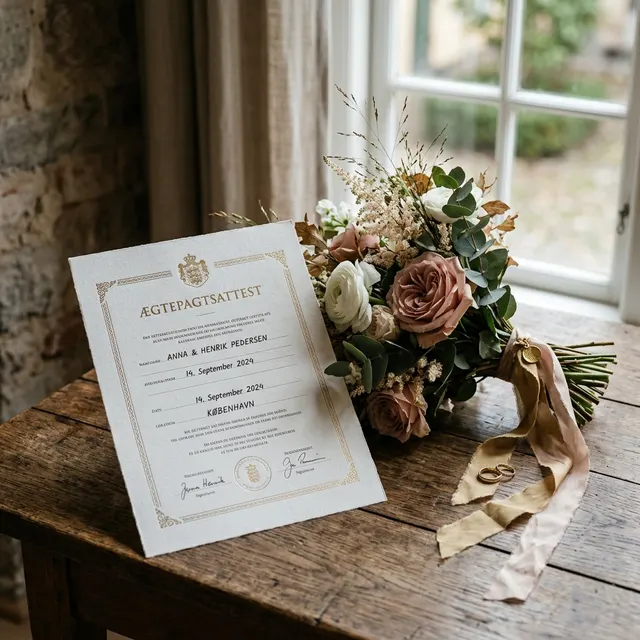
After your wedding in Denmark, you receive a Danish marriage certificate (vielsesattest) from the municipality where you married. In Copenhagen, Aabenraa and Tønder it is issued in five languages (Danish, English, German, French and Spanish). Whether you also need an apostille depends only on where you want to present it. This guide answers that for EU countries, for Hague Convention countries and for countries outside the Convention. For the whole journey from the first document to the ceremony, see our guide to getting married in Denmark as an international couple.
What is an apostille?
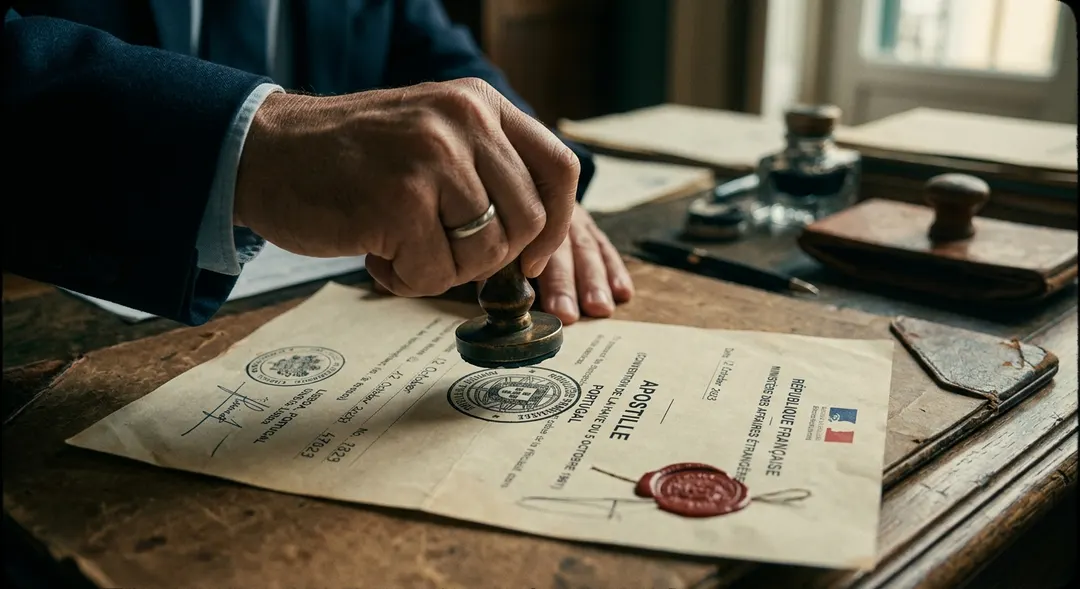
An apostille is a standardised certificate that confirms the authenticity of a public document — such as a marriage certificate — for use in another country. It comes from the Hague Convention of 5 October 1961 abolishing the requirement of legalisation for foreign public documents, which has 130 contracting parties (HCCH status table, as of 30 June 2026).
The apostille confirms that the signature and seal on your certificate come from a competent Danish authority. It is authentication, not recognition: what the marriage means legally in the destination country — for your surname, residence or tax status — is decided by that country's own rules.
In practice there are three cases, not two:
| Where you present the certificate | What you need |
|---|---|
| Authorities in another EU country | usually no apostille (EU Regulation 2016/1191); some offices still ask — check first |
| Countries outside the EU that are Hague Convention parties | the apostille is the usual form |
| Countries outside the Hague Convention (e.g. UAE, Egypt, Qatar, Iran) | no apostille possible — legalisation instead |
Don't confuse this with the apostille some couples need on their own documents before the wedding: that depends on the country that issued them and is covered in our Danish wedding documents checklist. This guide is only about the apostille on your Danish marriage certificate after the ceremony.
Do you need an apostille on your Danish marriage certificate?
You will usually need an apostille if an authority outside the EU asks for the certificate, for example to:
- record the marriage or update your civil status in a non-EU home country
- change your surname on documents issued outside the EU
- apply for a spouse visa or family reunification in a non-EU country
- meet any other request from a non-EU authority for an authenticated certificate
You usually do NOT need an apostille if:
- you present the certificate to authorities in an EU country — EU Regulation 2016/1191 exempts marriage certificates from the apostille (some offices still ask, so check with the registry office first)
- the destination country is not a Hague Convention party — then you need legalisation instead (see below)
If you are unsure, ask the authority where you will use the certificate before you order. You can also order the apostille later from home.
How does the Danish apostille work?
In Denmark, the apostille is issued by the Danish Ministry of Foreign Affairs (Udenrigsministeriet) — see the Danish MFA legalisation overview. The process has four steps:
- Step 1: your marriage certificate is submitted to the Ministry.
- Step 2: the Ministry verifies the signature and seal.
- Step 3: the apostille is attached to the certificate.
- Step 4: the apostilled certificate is returned.
What does the DWS Apostille Service include for €100?
We handle the entire process for you:
- ✅ We obtain the apostille from the Danish Ministry of Foreign Affairs
- ✅ We handle all communication with the Danish authorities
- ✅ We send the apostilled certificate to your address
- ✅ Processing time: the Ministry states 5–7 working days for documents received by post or courier (longer in busy periods), plus shipping to your address
You don't need to stay in Denmark for this — we take care of it after you've returned home.
How do you add the Apostille Service?
The Apostille Service is not part of the Comfort Package (€799.00) — it is an optional extra for €100. You can select it when booking or add it after the wedding, for example when an authority only asks for it later. See our transparent 2026 wedding cost breakdown for how the apostille fits into total spending.
Which countries recognise the Hague apostille?
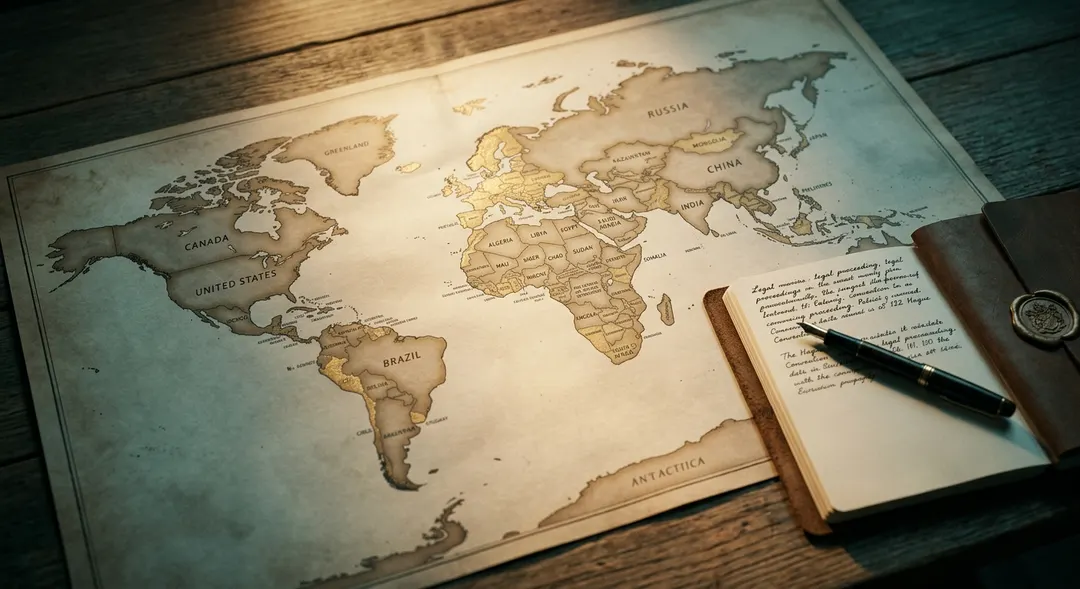
The apostille works in every country that has joined the Hague Apostille Convention. For our couples, the home countries of non-EU partners matter most. Contracting parties include (HCCH status table, as of 30 June 2026):
- Turkey, Russia, Ukraine, Belarus, Kazakhstan, Georgia, Armenia, Serbia and Bosnia and Herzegovina
- United Kingdom, USA, Canada (since 11 January 2024) and Australia
- Brazil, Mexico, India, Japan, South Korea, Indonesia, the Philippines and Pakistan
- China (since 7 November 2023), Saudi Arabia (since 7 December 2022) and Vietnam (since 11 September 2026)
Thailand has joined; the Convention applies there from 28 February 2027. The HCCH status table also shows whether a country has objected to another country's accession.
When is a translation of the Danish marriage certificate needed?
Usually not within the EU: the certificate is issued in five languages, and EU Regulation 2016/1191 also provides multilingual standard forms that serve as a translation aid. Authorities outside the EU — for example in Russia, Ukraine or Turkey — often ask for a certified translation into their official language.
We offer certified translations German ⇄ Russian for €50 per document, certified by a sworn translator in Germany. We do not translate other language pairs; for those you need a translator whose translations the destination country accepts. The authority decides which translation it accepts, so ask it before you order one.
Apostille by country — quick reference
Not every country needs an apostille on a Danish marriage certificate. The table shows the usual rule for the most common destinations. The final decision always lies with the authority in the destination country — if in doubt, ask that authority or the country's embassy before you order.
| Destination | Apostille on the Danish marriage certificate |
|---|---|
| Germany | usually not needed (EU Regulation 2016/1191); check with your Standesamt before ordering |
| Other EU countries, e.g. France, Italy, Spain, Poland | usually not needed (EU Regulation 2016/1191) |
| United Kingdom | England and Wales have no registration of overseas marriages; some bodies (e.g. for visas) may ask for an apostilled certificate — check first |
| USA, Canada, Australia | the apostille is the usual form when an authenticated certificate is requested; the certificate already contains English |
| Russia, Ukraine, Turkey | the apostille is the usual form; usually plus a certified translation |
| India, China, Brazil | the apostille is the usual form; a translation may be needed |
| Mexico | the apostille is the usual form; the certificate already contains Spanish |
| Japan | the Japanese partner reports the marriage within 3 months of the wedding to a Japanese embassy or consulate or to the municipality in Japan that keeps their family register (koseki), with the certificate and a Japanese translation; Japan's official guidance does not mention an apostille for this — check before ordering |
| UAE, Egypt, Iran, Iraq | no apostille possible — legalisation needed |
United Kingdom: in England and Wales there is no legal requirement or facility to register an overseas marriage with the General Register Office; a marriage that is valid in Denmark is generally recognised there. British partner? Read our guide to marrying in Denmark vs the UK after Brexit.
Russia: a marriage concluded in Denmark in line with Danish law is recognised as valid in Russia under Article 158 of the Russian Family Code — there is no separate registration. To present the certificate to Russian authorities you normally need the apostille and a certified Russian translation. The authority decides which translation it accepts, so ask first whether it accepts one certified by a sworn translator in Germany, which is how our translations are certified.
If you are unsure, ask the authority where you will use the certificate; you can also order the apostille later from home.
What if your country isn't a Hague Convention member?
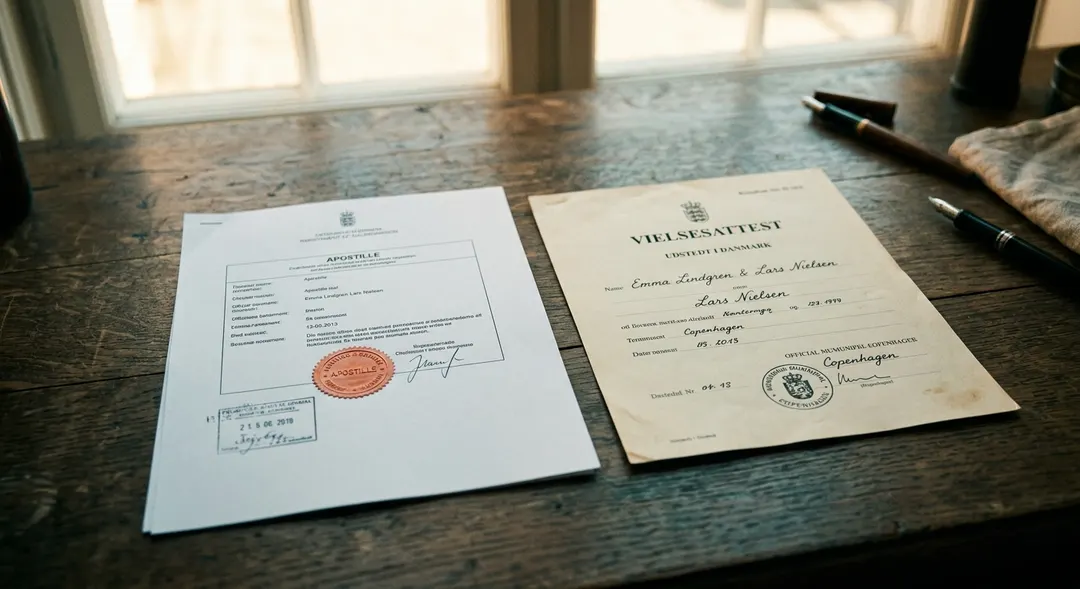
A handful of important countries (UAE, Qatar, Iran, Iraq, Egypt, Nigeria) are not parties to the Hague Apostille Convention. For countries outside the Convention an apostille is not enough — you need consular legalisation instead. It usually works in two steps:
- Step 1: the Danish Ministry of Foreign Affairs legalises the certificate.
- Step 2: the embassy or consulate of the destination country legalises that certification.
The exact steps and times are set by the destination country, and so are the extra fees. The embassy step is yours to arrange. Ask us before the wedding — we check what your destination country requires and factor it into the timeline.
How long does the apostille take, from order to delivery?
- Order — You select the Apostille Service when booking the Comfort Package, or add it after the wedding.
- After the ceremony — The municipality issues your Danish marriage certificate, and we agree with you how the original reaches us for the apostille.
- Submission — We submit it to the Danish Ministry of Foreign Affairs (Udenrigsministeriet) in Copenhagen.
- Ministry processing — The Ministry states 5–7 working days for documents received by post or courier, longer in busy periods.
- Delivery — The apostilled certificate is sent to your home address; delivery time depends on your country.
For countries outside the Hague Convention, allow extra time for consular legalisation on top. All times are guide values, not guaranteed deadlines.
If you have a genuine deadline (visa expiring, job relocation), talk to us before the wedding so we can plan the timing around it.
How do you use the apostilled certificate at home?
What you do with the certificate depends on the country and on what you want to update. Inside the EU you usually present the Danish certificate without an apostille. The most common uses:
- Name change — at the civil registry or ID office of your home country; in Germany the Standesamt records a joint married name.
- Spouse visa or family reunification — at the immigration authority of the country where you want to live. Outside the EU, the apostille confirms that the Danish certificate is authentic.
- Tax status as a married couple — at your tax or registration office.
- Banks, insurance, pensions and wills — update accounts and beneficiaries; each institution sets its own requirements.
- Health insurance — add your spouse where your insurer allows it; within the EU the certificate usually needs no apostille.
If you're applying for a spouse visa or family reunification, our Denmark wedding visa requirements guide covers the residence-permit side. For binational couples, our Denmark binational couples guide explains cross-border recognition in more detail.
Questions? Contact Denmark Wedding Services — we're here to help you use your Danish marriage certificate abroad.
FAQs About Danish Marriage Apostille
Can DWS handle the apostille for us?
Yes — the apostille on your finished Danish marriage certificate is an optional €100 service (it is not part of the €799.00 Comfort Package). We submit your original certificate to Udenrigsministeriet for apostille processing (the Ministry states 5–7 working days for documents received by post or courier, longer in busy periods), and mail the apostilled certificate to your home address via registered post — the government fee is included in the €100 service. Delivery time then depends on the postal route to your country.
Can we get the apostille if we have already left Denmark?
Yes — the Danish Ministry of Foreign Affairs (Udenrigsministeriet) does not require you to be present for the apostille. We obtain the apostille on your original certificate and mail it internationally via registered post, so you can leave Denmark right after the ceremony and still receive the apostilled certificate at home. You can also order the service later, for example when an authority only asks for the apostille months after the wedding.
Do I need an apostille to use my Danish marriage certificate in another EU country?
Usually not. Under EU Regulation 2016/1191, in force since 16 February 2019, public documents on civil status — including marriage certificates — are exempt from the apostille when presented to authorities of another EU member state. In practice some offices still ask for one, so check with the registry office or authority where you will present the certificate before you order. Outside the EU, in countries that are parties to the Hague Apostille Convention (130 contracting parties in total), the apostille is the usual form.
Does the Danish marriage certificate need a translation?
Usually not. Copenhagen, Aabenraa and Tønder issue the certificate in five languages (Danish, English, German, French and Spanish), and inside the EU the multilingual standard forms of Regulation 2016/1191 can serve as a translation aid. Some authorities outside the EU ask for a certified translation, so check first which translation the authority accepts, including whether it accepts one certified in Germany. We offer certified translations German ⇄ Russian for €50 per document; we do not translate other language pairs.
Sources
- Danish Agency of Family Law — international marriages
- Your Europe (EU) — marriage and recognition across the EU
- Legalisation of documents — Danish Ministry of Foreign Affairs
- Apostille Convention status table — HCCH
- EU Regulation 2016/1191 on public documents — EUR-Lex
- Surrey County Council — overseas marriages and the General Register Office
- Russian Family Code, Article 158 — recognition of marriages concluded abroad
- Ministry of Justice of Japan — family register Q&A on international marriages
Ready to Start Your Danish Wedding?
Fill out our free checklist in about 2 minutes — we'll send you a personalized document list and guide you through every step.
Start Free Checklist →