Marrying a Sri Lankan, Bangladeshi or Nepali Partner in Denmark: Documents, the Bangladesh Apostille Exception and the Visa
Reviewed by Ludmila Bernowski, CEO & Co-Founder of Denmark Wedding Services. Last reviewed: November 2026. Practical, experience-based information, not legal advice — for legal questions, consult a qualified lawyer. Our Google Business Profile and reviews
Short answer: Yes, you can marry a partner from Sri Lanka, Bangladesh or Nepal in Denmark without living there. The rules differ by country: Bangladesh joined the Apostille Convention, but Denmark objected, so a Bangladeshi apostille has no effect here and the Danish Agency of Family Law (Familieretshuset) decides on the documents. Sri Lanka and Nepal are not in the Convention, so legalisation applies. A never-married partner usually needs only the passport and a visa or residence permit.
On this page
- Can you marry a Sri Lankan, Bangladeshi or Nepali citizen in Denmark?
- Why does a Bangladeshi apostille not work for Denmark?
- Sri Lankan and Nepali documents: apostille or legalisation?
- Which documents does the partner actually need?
- Do the documents need a translation?
- Where does the partner apply for the Danish visa?
- Will Familieretshuset check the relationship?
- How long does it take, and when is the ceremony?
- How do you use the Danish certificate at home?
- How does Denmark Wedding Services help?
- Frequently asked questions
Who this guide is for: Couples where one or both partners are citizens of Sri Lanka, Bangladesh or Nepal: binational couples living in Germany or elsewhere in Europe, partners living in Europe on a work, study or family permit, partners who still live in their home country, and two South Asian citizens living in Europe who want a civil marriage in Denmark. For India and Pakistan we have separate guides.
Key points
- Denmark applies the same conditions to every couple: both 18 or older, unmarried, not closely related and lawfully in Denmark on the wedding day. No Danish residence is required.
- Bangladesh acceded to the Apostille Convention on 29 July 2024 (in force 30 March 2025). Denmark objected on 24 January 2025, so the Convention does not apply between Denmark and Bangladesh.
- A Danish embassy cannot endorse Bangladeshi documents, and the Danish embassy in Dhaka does not legalise public documents issued in Bangladesh. Familieretshuset, as the authority that asks for the document, decides whether it can accept it.
- Sri Lanka and Nepal are not parties to the Apostille Convention. Their documents need legalisation, which takes place in the issuing country.
- A partner who has never been married usually needs no civil-status document from home: the passport plus a visa or residence permit, and single status is declared on the application.
- All three nationalities need a Schengen visa unless they hold a residence permit from a Schengen country. Sri Lankans apply through Norway's application centre in Colombo, Nepalis through Sweden's in Kathmandu, Bangladeshis at the visa application centre in Dhaka.
- The Comfort Package of Denmark Wedding Services costs €799.00 and includes the Danish authority fee (2,100 DKK in 2026) and two legal witnesses, in every Danish kommune.
Couples with a partner from Sri Lanka, Bangladesh or Nepal often find information about India or Pakistan and assume the same rules apply. They do not: each of the three countries has its own document route, and the visa is not handled by a Danish embassy in Sri Lanka or Nepal. This guide sets out the official rules as of November 2026. For mixed couples in general, see our guide to marrying a non-EU partner in Denmark.
Can you marry a Sri Lankan, Bangladeshi or Nepali citizen in Denmark?
Yes. Danish marriage law does not depend on nationality or religion. Familieretshuset checks that both partners are at least 18, are not married to anyone else, are not closely related and are lawfully in Denmark on the day of the ceremony. Neither of you needs a Danish address, and two citizens of these countries can marry each other the same way.
The wedding is a civil ceremony at a Danish town hall. In Denmark the civil ceremony is the legally relevant act; a religious or family ceremony at home, if you want one, is a separate, personal choice. You apply online before you travel and come to Denmark for the ceremony.
Why does a Bangladeshi apostille not work for Denmark?
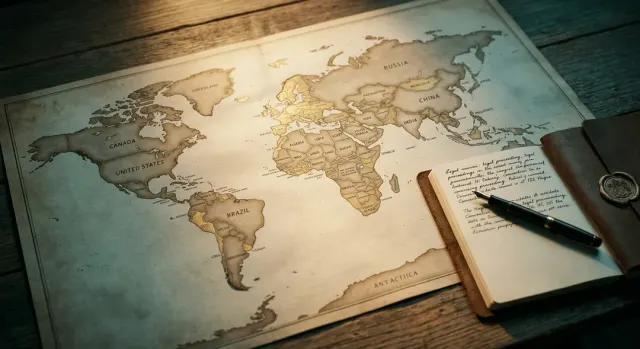
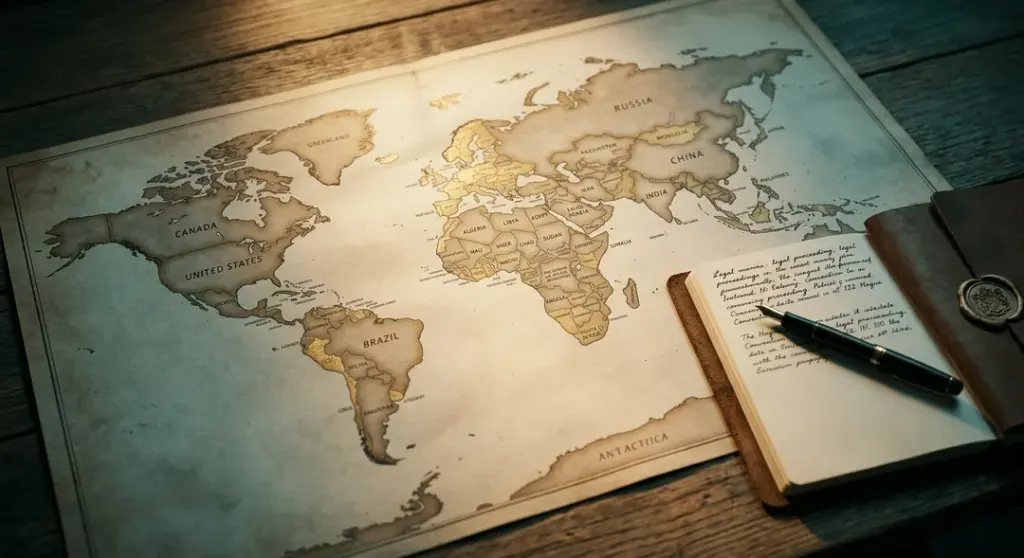
Bangladesh acceded to the Hague Apostille Convention on 29 July 2024, with effect from 30 March 2025. Under the Convention, an existing party can object to a new accession, and then the Convention does not apply between the two countries. Denmark objected to Bangladesh's accession on 24 January 2025, as did Germany, Austria, Belgium, France, the Netherlands and several other states. The Danish Ministry of Foreign Affairs confirms that the Convention between Denmark and Bangladesh is not applicable, so an apostille from Bangladesh is not enough for Denmark.
The usual fallback, legalisation by a Danish embassy, is not available either. The Ministry lists Bangladesh among the countries whose documents a Danish embassy cannot endorse, and the Danish embassy in Dhaka states that it does not legalise public documents issued in Bangladesh. Its answer is to contact the Danish authority that asked for the document. For a wedding, that authority is Familieretshuset, and it decides whether it can accept the document without an endorsement. It may ask for more information or documentation in an individual case.
Pakistan is in exactly the same situation; our guide to marrying a Pakistani partner in Denmark explains it in more detail.
Sri Lankan and Nepali documents: apostille or legalisation?
Legalisation. Neither Sri Lanka nor Nepal is a party to the Apostille Convention, and Familieretshuset says that documents from such countries usually need legalisation, which must take place in the issuing country; the procedure varies by country. In both countries the first step is the foreign ministry: in Sri Lanka the Consular Affairs Division of the Ministry of Foreign Affairs authenticates birth, marriage and death certificates, and documents issued in Nepal are generally attested by the Department of Consular Services in Kathmandu.
Which further step Denmark needs depends on the document and on what Familieretshuset asks for. We check this for your case before you order anything, because for many couples no home-country document is needed at all (see the next section). For the rules of other countries, see our overview of apostille and legalisation by country. Our Indian partner guide covers India, which is an apostille country.
Which documents does the partner actually need?
Often fewer than couples fear. The decisive question is whether the partner has been married before.
| Situation of the partner | What is usually needed |
|---|---|
| Never married | Passport, visa or residence permit; single status declared on the application |
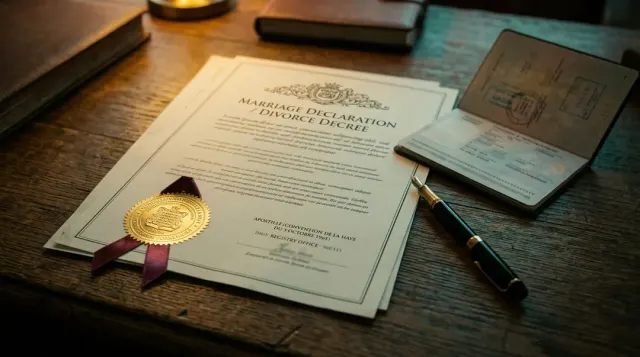
| Divorced | As above, plus the divorce document and proof that it is final |
| Widowed | As above, plus the former spouse's death certificate |
| Children with the other partner | Each child's birth certificate |
| Living at the same address as the other partner for at least 6 months | An official registration certificate for each partner showing the shared address |
The passport is needed in every case: colour photos or scans of every page. Familieretshuset requires a passport issued within the last 10 years, with at least 2 empty pages and valid for at least 3 months beyond your stay. A passport never needs an apostille or legalisation. The Bangladesh rule above therefore matters mainly for divorce, death and birth certificates, not for a never-married partner.
Names must be spelled the same way on the passport, any civil document and the application. South Asian names are often written with a different order or spelling across documents; if yours differ, see our guide to different name spellings on documents. A foreign divorce is recognised only if a competent court or authority was involved; our guide for divorced partners who want to marry again explains the rules.
Do the documents need a translation?
Only if they are not in Danish, English or German. Many certificates from Sri Lanka, Bangladesh and Nepal are issued in English or with an English version, and an English document is accepted as it is. A document in Bengali, Sinhala, Tamil or Nepali needs a translation by an authorised translator into Danish, English or German, and if the document has been legalised, every stamp and marking must be translated too. Denmark Wedding Services translates German ⇄ Russian only, so these documents need another authorised translator. Our guide to translating documents for a Danish wedding explains what counts as an authorised translation.
Where does the partner apply for the Danish visa?
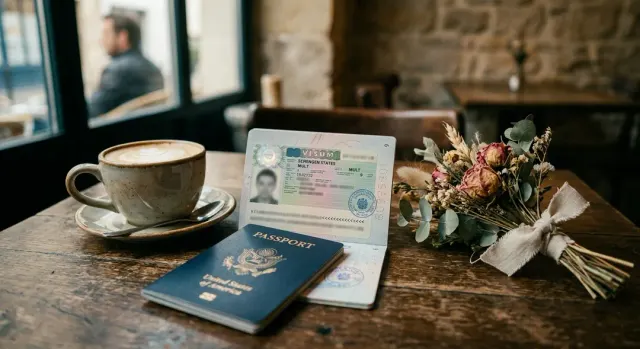
All three nationalities are on Denmark's list of visa-required countries. A partner who holds a residence permit from Germany, Austria or another Schengen country proves lawful stay with that permit and the passport. A partner living at home applies for a Schengen short-stay visa:
| Country | Where to apply |
|---|---|
| Bangladesh | Visa application centre (VFS Global) in Dhaka |
| Sri Lanka | Norwegian visa application centre (VFS Global) in Colombo |
| Nepal | Swedish visa application centre (VFS Global) in Kathmandu |
For Sri Lanka and Nepal, Denmark is represented by other Nordic embassies: the Embassy of Norway in New Delhi handles Danish Schengen visas for Sri Lankans, and the Embassy of Sweden in New Delhi handles them for Nepalis. At the Colombo centre, only citizens or residents of Sri Lanka may apply.
Familieretshuset accepts "a visa (including tourist visas)" as proof of lawful stay. The approval is valid for 4 months, so plan the visa dates around the wedding. Nobody can guarantee a visa. Our Denmark wedding visa guide covers entry for every nationality.
Will Familieretshuset check the relationship?
It can, for any couple where one partner is from outside the EU/EEA. Familieretshuset may ask how long you have known each other and where you met, ask for unedited photos of you together if the relationship is not sufficiently documented, and invite you to an interview. These checks apply to every nationality. Both partners must marry of their own free will. Our guide to proof of relationship shows what helps.
How long does it take, and when is the ceremony?
As a general rule, Familieretshuset issues the approval within about 5 working days once the application is complete and nothing is missing. That is a target, not a guarantee. Where it has asked for more information, Familieretshuset is currently processing applications received in October 2026.
The ceremony date is a separate step and depends on the town hall you choose. Couples living in Germany often choose Tønder, about 5 km from the German border, or Aabenraa; couples flying in often choose Copenhagen. Every ceremony needs two witnesses; they are included in our package.
How do you use the Danish certificate at home?
The marriage is valid under Danish law; recognition and legal effects in Sri Lanka, Bangladesh or Nepal depend on that country's law and on the authority you deal with. None of the three uses a Danish apostille: Sri Lanka and Nepal are not in the Convention, and Denmark's objection means the Convention does not apply between Denmark and Bangladesh. The Danish Ministry of Foreign Affairs says that for such countries a Danish document often has to be legalised additionally by the receiving country's representation in Denmark, or by the nearest relevant embassy if the country has none in Denmark.
For Nepal this is confirmed by the Embassy of Nepal in Copenhagen: a Danish document must first be legalised in Denmark, then the embassy attests it, for DKK 400 per page for a marriage certificate, paid in Danish kroner. For Bangladesh and Sri Lanka, ask the mission responsible for Denmark which form of the certificate it accepts, and ask the mission or the civil registry at home whether and how the marriage should be registered there. We explain the route for your case; our €100 Apostille Service is designed for countries where a Danish apostille is the right form, which these three are not. More on the certificate itself: apostille on the Danish marriage certificate.
Denmark Wedding Services is not a law firm. We provide practical and administrative support for marrying in Denmark; for questions about family law in Sri Lanka, Bangladesh or Nepal, registration at home, residence or family reunification, ask the mission, the authority concerned or a qualified lawyer. The marriage itself does not give a right to live in Denmark or Germany; residence is a separate application under the rules of the country where you want to live.
How does Denmark Wedding Services help?
The Comfort Package costs €799.00 and includes the Danish authority fee (2,100 DKK in 2026), a personalised checklist, the check of every document before we submit (including which home-country papers are needed at all, often none beyond the passport for a never-married partner), the application to Familieretshuset and all communication with it, including any requests for more documents, the booking of the ceremony date and two legal witnesses. We arrange the ceremony in any Danish kommune, and you pay only after our document check. For Bangladeshi documents we prepare the file so Familieretshuset can decide without an embassy endorsement, but we cannot promise that it accepts a particular document. Travel, accommodation, visa fees and translations are not included.
We support you in English, German, Russian, Spanish and French. Your first step is the free document checklist; if the partner was married before, write to us before you apply.
Frequently asked questions
Bangladesh joined the Apostille Convention. Is an apostille enough for Denmark?
No. Denmark objected to Bangladesh's accession on 24 January 2025, so the Convention does not apply between the two countries. A Danish embassy cannot endorse Bangladeshi documents either; Familieretshuset decides whether it accepts a document without an endorsement.
Can the Danish embassy in Dhaka legalise our documents instead?
No. The Danish embassy in Dhaka does not legalise public documents issued in Bangladesh and refers you to the Danish authority that asked for the document, which for a wedding is Familieretshuset.
Do Sri Lankan and Nepali documents need an apostille or legalisation?
Legalisation. Neither Sri Lanka nor Nepal is a party to the Apostille Convention, and Familieretshuset says such documents usually need legalisation in the issuing country. A never-married partner often needs no home-country document at all.
Where does a Sri Lankan or Nepali partner apply for the Danish visa?
A Sri Lankan partner applies at the Norwegian visa application centre in Colombo; the Embassy of Norway in New Delhi handles the application for Denmark. A Nepali partner applies at the Swedish visa application centre in Kathmandu; the Embassy of Sweden in New Delhi handles it.
Do English-language certificates need a translation?
No. Documents in Danish, English or German are accepted as they are. Anything in Bengali, Sinhala, Tamil or Nepali needs an authorised translation into Danish, English or German, including the stamps on a legalised document.
Is the Danish marriage recognised in Sri Lanka, Bangladesh or Nepal?
The marriage is valid under Danish law; recognition and legal effects at home depend on that country's law. For these countries the Danish certificate usually needs legalisation, not an apostille. Ask the mission responsible for Denmark which form it accepts and how to register the marriage.
Sources
- Ministry of Foreign Affairs of Denmark — legalisation of foreign documents (objection to Bangladesh and Pakistan), read 2026-11-23
- Embassy of Denmark in Bangladesh — legalisation in Bangladesh, read 2026-11-23
- HCCH — status table of the Apostille Convention, read 2026-11-23
- Dutch treaty database — Apostille Convention, objections to accessions, read 2026-11-23
- Familieretshuset — documentation requirements: apostille, legalisation, translation, read 2026-11-23
- Familieretshuset — legal residence for marriage in Denmark, read 2026-11-23
- Familieretshuset — banning sham marriages, read 2026-11-23
- New to Denmark — countries with a visa requirement, read 2026-11-23
- Ministry of Foreign Affairs of Denmark — where to apply for a visa, read 2026-11-23
- Embassy of Denmark in India — information for Bhutanese, Maldivians and Sri Lankans, read 2026-11-23
- Ministry of Foreign Affairs of Denmark — legalisation of Danish documents, general, read 2026-11-23
- Ministry of Foreign Affairs of Sri Lanka — online consular services, read 2026-11-23
- Embassy of Nepal, Copenhagen — document authentication, read 2026-11-23
Written by Ludmila Bernowski, CEO and co-founder of Denmark Wedding Services. All facts checked against the official sources above on 23 November 2026.
Watch Our Video
Follow us on YouTube, Instagram & TikTok for more wedding tips
Ready to Start Your Danish Wedding?
Fill out our free checklist in about 2 minutes — we'll send you a personalized document list and guide you through every step.
Start Free Checklist →