Danish Wedding Traditions: Customs with Sources
Reviewed by Ludmila Bernowski, CEO & Co-Founder of Denmark Wedding Services. Last reviewed: November 2026. Practical, experience-based information, not legal advice — for legal questions, consult a qualified lawyer. Our Google Business Profile and reviews
Short answer: The best-known Danish wedding traditions are the bridal waltz (*brudevals*) to Niels W. Gade's music, with guests clapping in a ring around the couple, followed by friends cutting holes in the groom's socks. Kransekage, a marzipan ring cake, is sometimes the wedding cake. None of these belong to the legal ceremony, which takes about 10 minutes in Copenhagen; couples add them at the dinner or party afterwards.
On this page
- What is the Danish bridal waltz (brudevals)?
- Why do friends cut the groom's socks?
- What happens to the bride's veil?
- What is kransekage, and is it a wedding cake?
- What is a polterabend in Denmark?
- Which older Danish wedding customs does Lex record?
- What are the æresport and the anniversary names?
- Are occasion songs a Danish tradition?
- Which popular customs have no reliable source?
- Do traditions belong in the civil ceremony itself?
- Can we throw rice at Copenhagen City Hall?
- How can we use Danish traditions after a town hall wedding?
- How DWS helps
- Frequently asked questions about Danish wedding traditions
Who this guide is for: Couples from abroad who marry at a Danish town hall and want to add a Danish touch to their day, guests invited to a Danish wedding, and anyone who wants to know which "Danish traditions" are actually documented.
Key points
- Every custom here is taken from Lex, the Danish national encyclopaedia, or from the City of Copenhagen; the sources below name the Lex authors where Lex gives one.
- The bridal waltz has three parts: Gade's music from the ballet *Et Folkesagn*, the ring of clapping guests and the sock-cutting afterwards.
- Kransekage is best known from New Year's Eve and is sometimes served as a wedding cake.
- A polterabend is the party friends hold before the wedding; the æresport (arch of honour) mainly belongs to silver and golden anniversaries.
- At Copenhagen City Hall, rice and confetti are not allowed inside or on the steps, but rice is welcome on City Hall Square.
- Traditions are optional and belong to the celebration. The legal part is the civil ceremony with two witnesses.
What is the Danish bridal waltz (brudevals)?
The *brudevals* is the newlyweds' first dance at a Danish wedding party. According to Lex, the music comes from Niels W. Gade's score for the ballet *Et Folkesagn* (1854), and during the 1900s Gade's waltz became a fixed part of Danish weddings. While the couple dances, the guests form a ring around them, clap in time and slowly move closer. Lex adds that it matters less how well the couple dances than that the tradition is kept and the dance happens before midnight.
Why do friends cut the groom's socks?
The sock-cutting is the third part of the bridal waltz ritual. After the dance, friends cut holes in the groom's socks to show that he is no longer single. Lex links it to older Scandinavian customs in which socks stood for a man's unmarried status, and says that today it is mostly about humour and togetherness. Lex mentions socks; it does not mention cutting a tie.
What happens to the bride's veil?
Lex describes tearing the bride's veil into pieces right after the bridal waltz as an old ritual that lives on at some weddings, where guests take small pieces home as a token of luck. Historically, Lex writes, rituals around midnight marked the step from single to married life: the young people danced the couple out of their unmarried circle, and the bride exchanged her bridal wreath for a married woman's headdress.
What is kransekage, and is it a wedding cake?
Kransekage is baked from marzipan with sugar and egg whites, shaped as rings stacked into a tall cone and decorated with thin lines of white icing. Lex says it is traditionally served at New Year's parties and is sometimes served as a wedding cake. If you want one at your dinner, ask the restaurant or a bakery near your town hall in good time. Lex also records that the wedding cake itself came to Denmark from southern Europe, England and the USA.
What is a polterabend in Denmark?
A polterabend is a get-together that friends arrange for the couple before the wedding, marking the end of single life. The name is German: *poltern* means to make noise, after the custom of driving evil spirits out of the couple's future home with noise. Lex says the custom has been known in the Nordic countries since the 1500s under other names, the German word became common from the late 1800s, and until about 1980 it was held almost only by men in Denmark.
Which older Danish wedding customs does Lex record?
- The procession: the word *bryllup* originally meant the procession of riders and wagons that escorted the couple, with music, to and from church, so that there were witnesses to the marriage.
- Noise against evil spirits: music and gunfire, and in the 1900s tin cans tied to the newlyweds' car.
- Something red and copper coins: red was thought to protect against evil, and copper coins were fastened to the bride's petticoat under the dress.
- Over the threshold: the groom lifted the bride over the threshold of their shared home.
- Rice: grain thrown at the couple stood for new life.
These are history, not rules. Couples pick the ones they like.
What are the æresport and the anniversary names?
The *æresport* is an arch of honour that friends or family put up at the couple's door, usually in the dark. According to Lex it belongs mainly to silver weddings (*sølvbryllup*, 25 years) and golden weddings (*guldbryllup*, 50 years): from around 1900 couples began to be woken early in the morning with music and song, and they stand in the arch while the guests sing. Lex lists names such as *papirbryllup* (1 year), *træbryllup* (5), *tinbryllup* (10), *diamantbryllup* (60) and *jernbryllup* (70), and stresses that these names are not official.
Are occasion songs a Danish tradition?
Yes. A *lejlighedssang* is a song written for one particular occasion and sung to a well-known melody, usually by friends or family. Lex calls it a lively and distinctly Danish folk tradition, found elsewhere but nowhere near as widely, and names birthdays and confirmations as private occasions. Guests who want to honour the couple in Danish style can write one for the dinner.
Which popular customs have no reliable source?
Some lists online say Danish guests kiss the bride when the groom leaves the room, and the groom when the bride leaves, sometimes standing on chairs. This is often told, but we found no reliable source for it in Lex or on official Danish pages, so we do not present it as a Danish tradition. The same goes for "most Danes do X" figures: we know of no dataset behind them.
Do traditions belong in the civil ceremony itself?
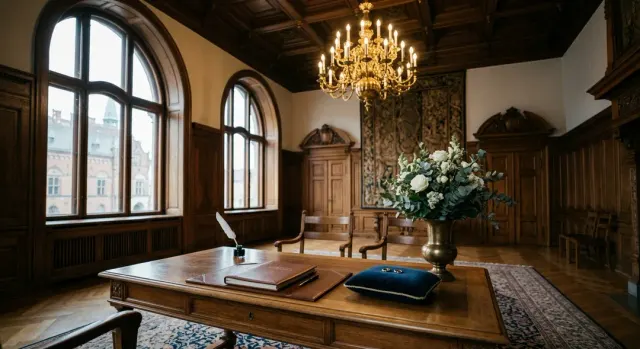
No. A Danish civil wedding (*borgerlig vielse*) is a short legal act. In Copenhagen it takes about 10 minutes from start to finish; in Tønder, in our experience, about 10–15 minutes; Aabenraa says a wedding there takes about 20 minutes in all. Two witnesses must be present. Lex notes that civil weddings were introduced in 1851 because the religious freedom of the 1849 Constitution required them, that the marriage laws of 1922 made them always available, and that a municipality must marry a couple whether or not either partner lives there.
Did you know? Danish weddings once needed a *forlover*, a person who confirmed that the couple were not too closely related. Lex states that this requirement was abolished in 1969. What happens on the day: the Danish civil ceremony and witnesses at a Danish wedding.
Can we throw rice at Copenhagen City Hall?
Yes, but only outside. The City of Copenhagen says rice, confetti and the like are not allowed inside City Hall or on the steps leading up to it, while rice is welcome on City Hall Square. Helium balloons are not allowed inside. Up to 75 guests can attend, including children and the photographer, guests may take photos and film during the ceremony, and others can join by video call. More on the day itself: Copenhagen City Hall.
How can we use Danish traditions after a town hall wedding?
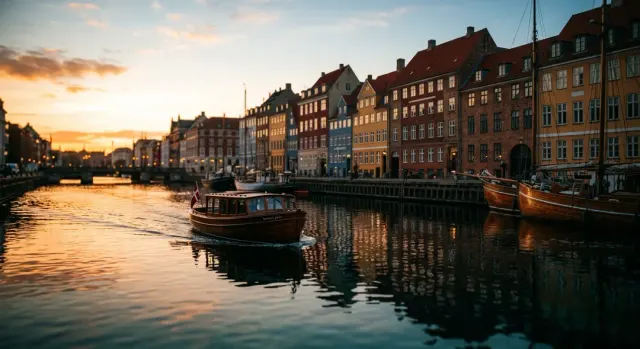
- In Copenhagen: rice on City Hall Square, then a walk to the romantic photo spots, and a kransekage at the reception or dinner.
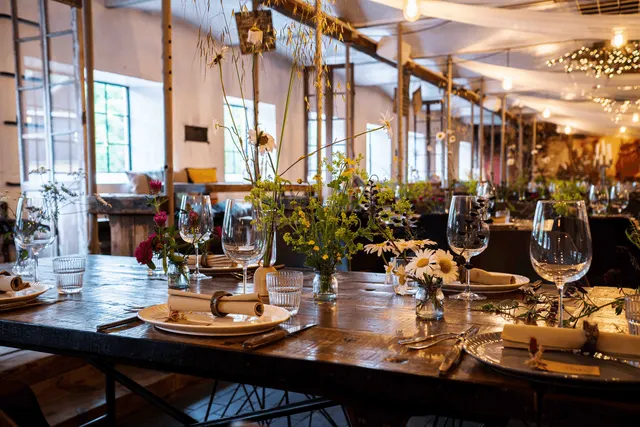
- In Tønder or Aabenraa: a dinner in the countryside, for example at our partner venue Krusmølle near Aabenraa, with a brudevals to Gade's music and sock-cutting by your friends. Town details: Tønder and Aabenraa.
- Just the two of you: many of the customs work for a small celebration too; see eloping in Denmark.
- A second celebration at home: a symbolic ceremony or a church blessing can follow the legal wedding later.
- What to wear: see what to wear to a town hall wedding.
The Danish words used here are explained in the Danish wedding glossary.
How DWS helps
- Comfort Package, €799.00: the official 2,100 DKK fee (2026) is included in our package. We check your documents, submit the application to the Danish Agency of Family Law (Familieretshuset), book your ceremony date and make sure two witnesses are there, in Copenhagen, Tønder, Aabenraa or any other Danish municipality.
- You plan the party, we handle the legal part: the dinner, the cake and the bridal waltz are yours to arrange; the reception at Krusmølle is booked directly with the Krusmølle team.
- Questions in your language: our team answers in English, German, Russian, Spanish and French.
Approval and ceremony are two separate clocks. Familieretshuset aims for about 5 working days once an application is complete; that is a target, not a guarantee. Where it has asked for more information, it is currently working on applications received in October 2026.
The video on this page (in English) shows how a Copenhagen City Hall wedding works. To get started, see our process and the free wedding checklist.
Frequently asked questions about Danish wedding traditions
Why do Danes cut the groom's socks?
It is part of the bridal waltz ritual: after the dance, friends cut holes in his socks to show that he is no longer single, according to Lex.
What music is played for the Danish bridal waltz?
Traditionally the waltz by Niels W. Gade from the ballet Et Folkesagn (1854), according to Lex.
What is kransekage?
A cake of marzipan rings stacked into a tall cone with thin white icing. Lex says it is traditionally served at New Year and sometimes served as a wedding cake.
Can we throw rice at Copenhagen City Hall?
Not inside City Hall or on its steps, but the City of Copenhagen says rice is welcome on City Hall Square.
What is a polterabend in Denmark?
A party that friends hold for the couple before the wedding to mark the end of single life. The name is German and refers to making noise to drive away evil spirits.
What is an æresport?
An arch of honour that friends or family put up at the couple's door, mainly for silver and golden wedding anniversaries, according to Lex.
Do Danish civil weddings include traditions?
The civil ceremony is a short legal act with two witnesses. Traditions such as the bridal waltz belong to the celebration afterwards.
Do we need a forlover?
No. Lex states that the requirement for a forlover was abolished in 1969. Today two witnesses attend the wedding, and both are included in our package.
Sources
- Lex – brudevals, by Inger Vinther Damsholt (in Danish) – read 23 November 2026
- Lex – bryllup, by Else Marie Kofod and Finn Stefánsson (in Danish) – read 23 November 2026
- Lex – kransekage, by Bi Skaarup (in Danish) – read 23 November 2026
- Lex – polterabend, by Else Marie Kofod (in Danish) – read 23 November 2026
- Lex – bryllupsdag, by Caroline Nyvang and Else Marie Kofod (in Danish) – read 23 November 2026
- Lex – lejlighedssang, by Lars Ole Bonde (in Danish) – read 23 November 2026
- Lex – forlover (in Danish) – read 23 November 2026
- Lex – borgerlig vielse (in Danish) – read 23 November 2026
- Aabenraa Kommune – Vielse (in Danish) – read 23 November 2026
- City of Copenhagen – City Hall wedding – read 23 November 2026
- Familieretshuset – Processing time for certificates of marital status – read 23 November 2026
Written by Ludmila Bernowski, co-founder of Denmark Wedding Services; reviewed by Shenol Reetz, co-founder. Hero photograph courtesy of Krusmølle. Denmark Wedding Services is not a law firm; the notes on the civil ceremony are general information, not legal advice. Last checked: 23 November 2026.
Watch Our Video
Follow us on YouTube, Instagram & TikTok for more wedding tips
Ready to Start Your Danish Wedding?
Fill out our free checklist in about 2 minutes — we'll send you a personalized document list and guide you through every step.
Start Free Checklist →