Elopement in Denmark: The Complete 2026 Guide
Reviewed by Ludmila Bernowski, CEO & Co-Founder of Denmark Wedding Services. Last reviewed: October 2026. Practical, experience-based information, not legal advice — for legal questions, consult a qualified lawyer. Our Google Business Profile and reviews
Short answer: Denmark is one of Europe’s simplest places to elope: no residency requirement (though you must be able to enter and stay lawfully), few documents, and a ceremony date booked after approval. The €799.00 Comfort Package covers the legal core and two legal witnesses; with flights within Europe, a hotel and meals, a Danish elopement typically lands around €1,170–€1,700.
On this page
- Why elope in Denmark?
- Where can you elope in Denmark?
- How much should you budget for a Danish elopement?
- How to plan your Denmark elopement in 5 steps
- Is an elopement in Denmark right for you?
- Why choose an elopement over a traditional wedding?
- When is the best season to elope in Denmark?
- How do you choose an elopement photographer in Denmark?
- Honeymoon ideas after a Copenhagen elopement
- How do you tell your family you are eloping?
- How long do you actually need on the ground in Denmark?
- What do you handle yourself versus what DWS handles?
- FAQs About Eloping in Denmark
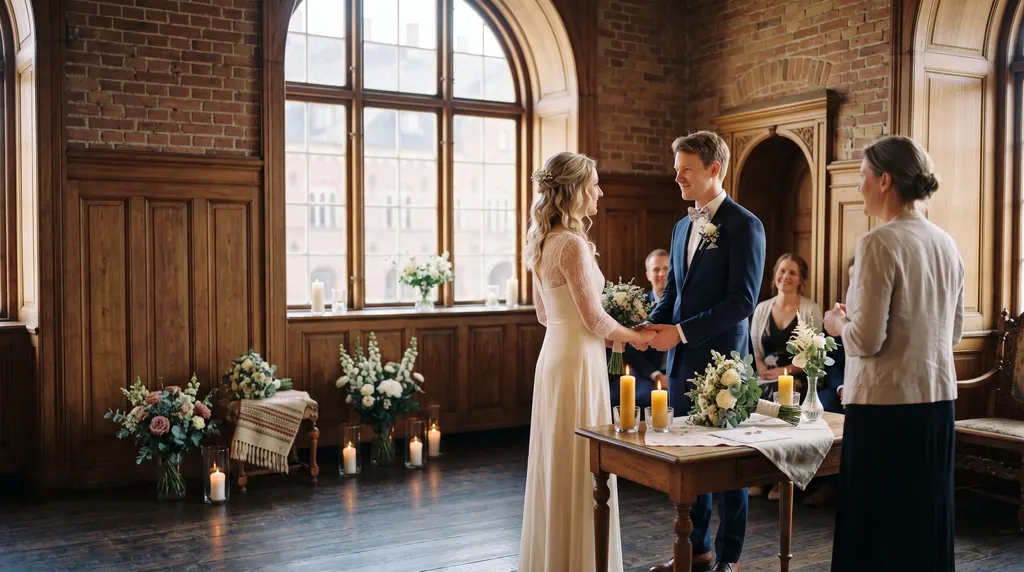
Who this guide is for: Couples who want an intimate elopement in Europe — in Copenhagen or a quieter Danish town — without a long, complicated planning process. An elopement is a small, legally binding civil wedding without a big celebration — often just the two of you and two witnesses, sometimes with a few close family members.
Key points
- No residency requirement to marry, but lawful entry and stay are required.
- Comfort Package €799.00 includes document handling and two legal witnesses.
- Complete applications: about 5 working days as a general target, not a guarantee; the ceremony date is booked afterwards and depends on the town hall's free dates.
- Late September often gives a good balance of light, weather, price and availability.
Travelling on a short-stay visa? Read our guide to marrying in Denmark on a Schengen visa — the 90-day rule changes the booking window.
Why elope in Denmark?

Couples from around the world choose to elope in Denmark for very practical reasons:
- No residency requirement to marry — You don't need to live in Denmark or be an EU citizen, but you must be able to enter and stay in Denmark lawfully for the ceremony.
- A short document list — Usually passports, proof of lawful entry or residence and a current proof of civil status. Divorced partners add the final divorce decree. Depending on the country that issued a document, it may need an apostille or legalisation and a translation into Danish, English or German by an authorised translator (a passport never needs an apostille). We check this for each document.
- Fast approval — The Danish Agency of Family Law (Familieretshuset) generally processes complete applications with no missing information in about 5 working days; cases needing more information take longer — this is a general target, not a guarantee.
- Legally binding — Your Danish marriage certificate is valid under Danish law. For use outside the EU it can be apostilled, which authenticates it in the member states of the Hague Apostille Convention (recognition of the marriage abroad depends on the destination country).
- No witnesses needed from your side — Two legal witnesses are included in our Comfort Package (many town halls also provide witnesses for ceremonies during opening hours).
Where can you elope in Denmark?
We offer ceremonies in three carefully chosen locations:
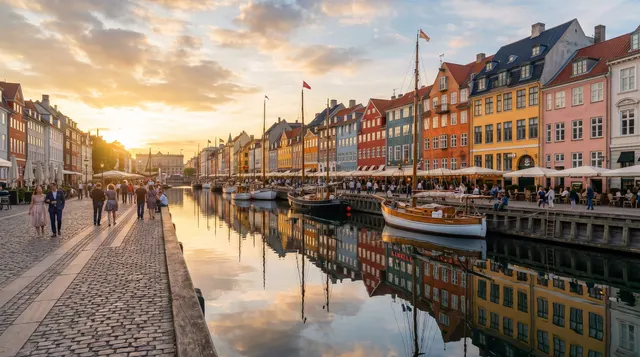
- Copenhagen — The capital with its historic City Hall, canal-side charm and cosmopolitan atmosphere. Perfect for couples who want an urban elopement with great dining and sightseeing. For the ceremony itself, read our guide to getting married in Copenhagen; for what to do afterwards, see our Copenhagen places-to-visit guide and top 5 romantic photo spots.
- Aabenraa — A calm harbour town in Southern Denmark, about 25 km from the German border. Ideal for couples who value a quieter, more intimate setting: read more about getting married in Aabenraa.
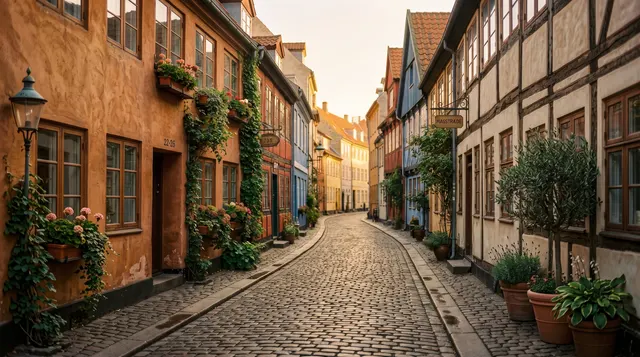
- Tønder — A charming historic town about 5 km from the German border, perfect for couples driving from Germany or Northern Europe; see our guide to the Tønder town hall wedding.
| Town | Where the ceremony takes place | Distance from the German border | Ceremony dates |
|---|---|---|---|
| Copenhagen | Copenhagen's historic City Hall | Far — Copenhagen lies in eastern Denmark | The city says the wait for a date can be up to four months |
| Aabenraa | Old Town Hall (Det gamle Rådhus), Storegade 30 | About 25 km | Dates are released 60 days in advance; in September 2026 the next free dates were about two months ahead |
| Tønder | Marriage office (Jomfrustien 8, opposite the town hall) | About 5 km | Couples from abroad are married on Tuesdays and Thursdays |
In all three towns the ceremony itself takes about 10–15 minutes, and the marriage has the same legal effect.
How much should you budget for a Danish elopement?
Our Comfort Package costs €799.00 and covers the legal and administrative part:
- Full document handling and application to Familieretshuset
- Ceremony booking at your chosen location
- Two legal witnesses
- 24/7 AI-powered support
A typical elopement budget at a glance (rough estimates):
| Item | Typical cost |
|---|---|
| Comfort Package: legal process, Danish authority fee and two witnesses included | €799.00 |
| Flights for two (within Europe) | roughly €150–€400 |
| One or two hotel nights | roughly €120–€300 |
| Meals and local transport | roughly €100–€200 |
| Total | approximately €1,170–€1,700 |
| Optional: half-day photographer | roughly €500–€900 |
From North America or Asia, budget more for flights; the other costs stay the same. That puts a Danish elopement at a fraction of the cost of a traditional wedding; a special dinner comes on top if you want one. Optional DWS services are the Apostille Service (€100, for using the Danish certificate outside the EU) and certified German ⇄ Russian translation (€50 per document). For the full cost line-by-line, see our transparent 2026 wedding cost breakdown. For a direct head-to-head with the other popular destination, our Denmark vs Cyprus wedding comparison breaks down processing time, cost, and document requirements side by side.
How to plan your Denmark elopement in 5 steps
- Fill out our checklist — Answer a few simple questions about your situation.
- Receive your personalized document list — We tell you exactly what's needed.
- Sign and upload — Sign the three pre-filled forms by hand and upload them with your documents (your phone camera works); we handle all communication with the Danish authorities.
- Get approved (about 5 working days, a target) — Once approved, your ceremony date is booked based on the town hall's free dates.
- Fly to Denmark and get married — You receive your Danish marriage certificate, which is issued in five languages.
Is an elopement in Denmark right for you?
A Danish elopement is perfect if you want a legally binding marriage without the stress, expense, or months of planning that a traditional wedding requires. Whether you're a binational couple facing bureaucratic hurdles, an LGBTQ+ couple seeking an inclusive destination, or simply two people who want to celebrate your love intimately — Denmark welcomes you. International couples will find the legal requirements in our guide to marrying in Denmark for international couples, and same-sex couples everything they need in our guide to same-sex marriage in Denmark.
Why choose an elopement over a traditional wedding?

The choice isn't only about money — it's about what you actually want from the day. Couples often mention these reasons:
- The two of you are the focus — No managing 80 guests' schedules, dietary needs, family politics, or seating charts. Just the two people who actually said "I do."
- The location matters more than the venue — You can spend the full day in places that mean something to you (Copenhagen at sunset, a quiet Aabenraa garden, the cobblestones of Tønder) instead of inside a hotel ballroom.
- You can repeat the celebration at home — Many couples elope in Denmark and host a reception at home weeks later. The legal part is done; the celebration is on your terms.
- The cost difference is large — A traditional wedding at home often costs many times more than the elopement budget in the table above; a photographer and a special dinner are optional extras on top.
- Time pressure — When you need to be married for visa, work, or family reasons, traditional planning timelines (6–12 months) aren't workable. An elopement usually needs far less lead time — how much depends on your documents and the town hall's free dates.
None of these mean elopement is "better" — just that for some couples, it's the right choice.
When is the best season to elope in Denmark?
- May–August — Long daylight, mild weather, every venue at its most photogenic. Peak season: town-hall dates fill up quickly — Copenhagen says the wait for a date can be up to four months, and Aabenraa releases its dates 60 days in advance. Start as early as you can; the approval is valid for 4 months (less if a passport or visa expires earlier).
- September–October — Our favorite. Golden light, reasonable temperatures, fewer tourists, and hotel rates often drop.
- November–April — Quietest, cheapest, most flexible. Cold weather (0–10°C) means cozy indoor moments, possible snow in Copenhagen, dramatic short-day light. Some couples specifically love a winter elopement for the intimacy.
Seasonal tip: late September often gives a good balance of weather, light, availability and price. For a month-by-month view, see the best time of year to get married in Denmark.
How do you choose an elopement photographer in Denmark?
Elopement photography is a different skill from traditional wedding photography — fewer formal group shots, more candid moments, more focus on landscape and intimacy. What to look for:
- Editorial portfolio — Look for photographers whose previous work has more environmental shots (couple in a landscape) than posed group shots. Their style suits the day better.
- Half-day packages — A 4-hour package (roughly €500–€900 by our estimate as of 2026; prices vary by photographer and season) covers ceremony, immediate post-ceremony photos, and a sunset session. Most elopements don't need full-day coverage.
- Local knowledge — Photographers based in Copenhagen, Aabenraa, or Tønder know the routes, light, and hidden spots. Visiting photographers can be excellent but charge more.
- Same-day preview — In our experience, some photographers send 5–10 highlight images within 24 hours so you can share them with family while waiting for the full gallery.
For specific Copenhagen photography locations, see our top 5 romantic photo spots in Copenhagen and our best places to visit in Copenhagen for additional backdrops.
Honeymoon ideas after a Copenhagen elopement
The Denmark trip itself can extend into a honeymoon. Popular routes:
- Copenhagen + Northern Jutland — 3 days Copenhagen, drive about 5 hours to Skagen for the dramatic meeting of two seas, end with quiet beach hotels.
- Copenhagen + Stockholm + Helsinki — 7-day Scandinavian capitals trip via train and ferry. Each city has its own character.
- Copenhagen + Bornholm Island — Take the ferry to Denmark's Baltic island. Empty beaches, smoked herring restaurants, medieval round churches.
- Copenhagen + Berlin — roughly 7-hour train ride south. Great for couples who want a city contrast.
- South Jutland coastal road — From Tønder, follow the Wadden Sea coast through Ribe, Esbjerg, and the islands of Rømø and Fanø. Quiet, nature-focused.
How do you tell your family you are eloping?
This is the part most couples worry about. A few approaches that tend to work:
- Tell parents in person, before the wedding — Even 1–2 weeks ahead. Surprise weddings hurt parental relationships more than the elopement itself.
- Frame it positively — "We wanted something just for the two of us, but we want to celebrate with you." Emphasize what you're including them in (a reception, a dinner) rather than what they're missing.
- Plan a home celebration — Even a simple family dinner with photos from Denmark gives parents a moment. Some couples plan a larger party 1–3 months later.
- Share photos generously — Send the gallery to family the day it arrives. Make them feel part of it.
- Don't apologize for the choice — Confidence travels. "This is what we chose, and we're so glad we did" lands better than nervous justification.
If you'd like the full process — every document, every step, every milestone — see our step-by-step guide to getting married in Denmark.
How long do you actually need on the ground in Denmark?
In our experience, most couples spend just 48–72 hours in Denmark — enough for the ceremony, an intimate dinner and post-wedding photos — because the slow part happens before you fly in: the Danish Agency of Family Law (Familieretshuset) reviews a complete application in about 5 working days, a general target, not a guarantee. Source: Familieretshuset — processing time for certificates of marital status
- Typical trip (our experience): 48–72 hours on the ground in Denmark
- Approval happens before travel — about 5 working days for complete applications
- Same-week fly in/out — once your approval and ceremony date are in place
What do you handle yourself versus what DWS handles?
DWS handles the application side: your personal document list, a check of every document, the application to Familieretshuset, any follow-up questions and the ceremony booking. You obtain your own documents — such as proof of residence and civil status (not older than 3 months) — sign the three pre-filled forms by hand, upload everything and make the personal choices: flights, what to wear and which of the three Danish towns suits you best. How long planning takes overall depends on your documents and the town hall's free dates.
FAQs About Eloping in Denmark
What does a Denmark elopement actually cost?
The legal and administrative part is the €799.00 DWS Comfort Package, which is all-in and includes all Danish authority fees — there is no separate government fee on top. Beyond that you budget only for your own travel, hotel and food: flights for two within Europe, one or two hotel nights and meals typically bring the total to around €1,170–€1,700 (from North America or Asia, budget more for flights); a photographer and a special dinner are optional extras. Optional DWS add-ons are the Apostille Service (€100, for using the Danish certificate outside the EU) and certified German ⇄ Russian translation (€50 per document).
Is an elopement in Denmark legally binding?
Yes. A ceremony at a Danish town hall is a full civil marriage, valid under Danish law, and you receive a Danish marriage certificate issued in five languages. Whether and how your home country registers the marriage depends on that country's rules. For use outside the EU the certificate may need an apostille — DWS offers an Apostille Service (€100) for the Danish certificate.
Do we need to bring our own witnesses?
No. Two legal witnesses are included in the Comfort Package, so the two of you can marry without bringing anyone. If family or friends travel with you, they are welcome to join the ceremony.
How far ahead should we plan an elopement in Denmark?
Start as soon as you have a rough time frame. Familieretshuset generally processes complete applications in about 5 working days (a general target, not a guarantee), and the approval is valid for 4 months — shorter if a passport or visa expires earlier. The real bottleneck is the ceremony date: Copenhagen City Hall says the wait can be up to four months, Aabenraa releases its dates 60 days in advance, and Tønder marries couples from abroad on Tuesdays and Thursdays. Dates fill up fastest from May to August, so for summer start as early as you can; off-season dates are usually easier to find.
Can our families join us if they want to?
Yes. Many couples bring a few close family members or friends — "elopement" means skipping the big celebration, not necessarily marrying alone. Ceremony rooms differ in size from town hall to town hall, so tell us your guest count when we book the ceremony. The two legal witnesses included in the Comfort Package are still useful even with family present — one less thing to organise. For family, the time commitment is short: many fly in for the ceremony day and leave the next morning.
Sources
- Danish Agency of Family Law — processing time for marital-status certificates — complete applications are generally processed in about 5 working days
- Danish Agency of Family Law — apply for a certificate of marital status — the documents to attach, including proof that a previous marriage has ended
- Danish Agency of Family Law — documentation requirements — apostille or legalisation depending on the issuing country; translation into Danish, English or German
- Danish Agency of Family Law — international marriages — overview for couples who do not live in Denmark
- Getting married in Denmark — lifeindenmark.borger.dk — official Danish citizen portal on the conditions for marrying
- Danish Ministry of Foreign Affairs — legalisation of documents — apostille on Danish documents such as the marriage certificate
- City of Copenhagen — City Hall wedding — the wait for a wedding date can be up to four months
- Aabenraa Municipality — marriage registry office — dates are released 60 days in advance
- Tønder Municipality — getting married in Tønder — ceremony days for couples from abroad (in German)
Watch Our Video
Follow us on YouTube, Instagram & TikTok for more wedding tips
Ready to Start Your Danish Wedding?
Fill out our free checklist in about 2 minutes — we'll send you a personalized document list and guide you through every step.
Start Free Checklist →