
The Complete Documents Guide for Marrying in Denmark
Getting married in Denmark is famous for one reason above all others: the document list is short. While Germany asks for 8–12 papers per partner, France demands a 30-day residency window, and Italy requires the *Nulla Osta* with apostille and translation, Denmark's Familieretshuset (Danish Agency of Family Law) typically needs four to six documents total — and processes them in 5 working days.
But "short" doesn't mean "simple." The real complexity is figuring out *which* short list applies to YOUR couple. Two German citizens have a different document set than a German + Russian couple. A previously-married American partner needs an apostilled divorce decree; a never-married EU partner does not. A widowed Indian partner needs a death certificate translated into English; a single Italian partner needs nothing extra.
This pillar is the master reference for every document scenario. Each section below is summarized here and explored in depth in a dedicated sub-guide. Whether you're 4 months out from your wedding date or 4 weeks, you'll find the exact list for your situation.
The Core Document List — What Every Couple Needs
Strip away every variation, and the universal foundation looks like this:
- Valid passport for both partners (≥3 months validity beyond the wedding date)
- Proof of legal entry into Denmark — Schengen entry stamp for non-EU citizens, EU passport itself for EU citizens, or a residence permit copy
- Certificate of marital status OR equivalent proof you are legally single (some countries call this *Ehefähigkeitszeugnis*, *Certificat de coutume*, *Nulla Osta*, etc. — but most couples don't need it; see exception list below)
- The 3 Familieretshuset forms — Service Contract, Power of Attorney, Truth Declaration (we provide these as printable PDFs)
That's the foundation. Everything below is variation.
Variation 1: If Either Partner Has Been Previously Married
You need a certified divorce decree (or death certificate of the former spouse) showing the marriage is fully legally dissolved. Specifics by country:
- Germany — *Scheidungsurteil mit Rechtskraftvermerk*. The "finality stamp" is critical; AFL rejects decrees without it.
- United Kingdom — *Decree Absolute* (not Decree Nisi). The Decree Nisi is the conditional first step; Decree Absolute is the final dissolution.
- United States — *Final Divorce Decree* from the issuing state, plus apostille from that state's Secretary of State (each US state apostilles its own documents).
- Russia — *Свидетельство о расторжении брака* with apostille from the Ministry of Justice. Russian divorce certificates are issued only AFTER the divorce is registered at ZAGS, not when the court ruling happens.
- India — Final divorce decree from the relevant court, plus apostille from the Ministry of External Affairs.
- Other Hague Convention countries — apostille required.
- Non-Hague countries (UAE, Saudi Arabia, etc.) — full embassy legalization chain instead of apostille.
For the full mechanics of when and how to apostille, see our apostille for Danish marriage certificate guide.
Variation 2: If Either Partner Is Widowed
You need a death certificate of the former spouse. If the death occurred outside Denmark, the certificate generally needs apostille (Hague countries) or embassy legalization (non-Hague countries). If your former marriage produced any Danish-relevant paperwork (e.g., the deceased was Danish), bring that as well — AFL may waive separate document requirements.
Variation 3: Non-EU Partner
The Schengen entry method matters more than the country of origin. AFL accepts:
- Schengen tourist visa (Type C, max 90 days) — used by most non-EU couples
- Schengen long-stay visa (Type D)
- Residence permit from any EU/EEA country
- Visa-free travel (USA, UK post-Brexit, Canada, Australia, Japan, etc. — for the standard 90/180 allowance)
What AFL does NOT require: a special "marriage visa" or "fiancé visa". You enter Denmark as a visitor under whichever Schengen path applies, marry, and leave. The marriage doesn't depend on a special immigration category. For full visa scenarios broken down by country, see visa requirements for marrying in Denmark.
Variation 4: Both EU Citizens
Simplest case. Passports + entry proof + the 3 Familieretshuset forms is usually enough. EU member states benefit from EU Regulation 2016/1191 which removes the apostille requirement for *intra-EU* civil status documents — so a German *Geburtsurkunde* doesn't need apostille for use in Denmark.
But: AFL does not actually require birth certificates for EU couples in most cases. The passports themselves prove identity and (combined with marital-status declaration) prove single status. Many couples bring birth certificates "just in case" — and most of them are never asked for them.
Variation 5: Same-Sex Couples
The document requirements for same-sex couples are identical to opposite-sex couples. Denmark legalised same-sex marriage in 2012 with full equal rights, and AFL processes applications without distinction. If you're returning to a country that doesn't recognise your Danish marriage, the marriage itself stays valid — what varies is recognition at home. For binational LGBTQ+ couples, see our same-sex marriage in Denmark guide for the cross-border recognition layer.
Variation 6: Asylum Status / Refugee Travel Document
This is the one scenario where the standard list breaks down. Refugee travel documents are accepted by AFL but the case-by-case review takes longer (often 10–14 working days instead of 5). If one or both partners is on asylum status, contact us directly before submitting — there are nationality-specific edge cases.
Variation 7: Stateless Persons
AFL accepts stateless persons under specific UN Convention frameworks. The proof-of-identity document varies by country of residence; most commonly it's a Convention Travel Document. Submit before booking flights — these cases need bespoke document review.
The Surprisingly Long List of Documents You Do NOT Need
This is where Denmark stands out from every other European wedding destination. The following documents are NOT required by AFL for the typical international couple:
- Birth certificate — not needed in most cases (passport proves identity)
- Certificate of No Impediment — not required (Denmark uses a simpler "Truth Declaration" form)
- Embassy appointment / consular document — not required
- Residency proof in Denmark — not required (zero residency requirement, see residency requirements for marrying in Denmark)
- Translation of EU documents into Danish — not required (EU Regulation 2016/1191)
- Sworn affidavits about the relationship — not required
- Photographs together / proof of relationship — not required
- Banking records — not required
- Medical certificates — not required
- Religious documents — not required (Danish civil marriage is purely civil)
The contrast is stark: the German *Standesamt* typically asks for 6–9 of these documents from EU couples, and 10–14 from binational couples. France often asks for 11+ documents per partner. Denmark asks for 3–4 per partner total. For the full side-by-side comparison, see our Denmark vs Germany wedding guide.
The 3 Familieretshuset Forms — In Detail
Beyond identity documents, AFL requires three forms specific to your application. We provide all three as PDFs after you complete our free personalized wedding checklist:
- Service Contract (Aftaleformular) — establishes Denmark Wedding Services as your authorized representative for the AFL submission. Lists both partners and the package booked.
- Power of Attorney (Fuldmagt) — legally authorises us to communicate with AFL, request additional documents on your behalf, and book your ceremony date once approved. Without this, AFL won't release your *Prøvelsesattest* (the marriage license) to anyone except you in person.
- Truth Declaration (Sandhedserklæring) — both partners declare under oath that they are legally single, of full mental capacity, and entering the marriage voluntarily. Equivalent to but simpler than the *Eheunbedenklichkeitsbescheinigung* used by some German Standesämter.
All three are signed once, scanned, and emailed back. No notarisation required for the standard application.
Document Submission — How It Actually Works
You don't post originals to Denmark. The submission is digital:
1. You complete our 60-second checklist; we email your personalized document list + the 3 forms 2. You gather your documents at home 3. You sign and scan the 3 forms 4. You upload everything via the secure upload portal in your email 5. We compile, audit, and submit to AFL on your behalf 6. AFL approves (typically 5 working days) and issues *Prøvelsesattest* 7. We book your ceremony date
For a deep-dive into AFL's review process, what they check, and refusal grounds, see our Danish Agency of Family Law (Familieretshuset) guide.
The 6 Most Common Document Mistakes — From 500+ Cases
Patterns we see repeatedly across our case archive:
1. Passport renewed mid-process — if you renew between submitting documents and the ceremony, AFL flags the passport-number change and may delay approval. Don't renew until after the wedding unless the passport actually expires. 2. Divorce decree without the finality stamp — Germany, Italy, and India in particular issue intermediate court rulings that look like final decrees but aren't. Look for the *Rechtskraftvermerk* (Germany), *Sentenza definitiva* (Italy), or final court seal (India). 3. Apostille from the wrong authority — every Hague country has a specific "competent authority" for apostille. US apostilles MUST come from the issuing state's Secretary of State, not the federal level. UK apostilles come from the Legalisation Office of the FCDO. 4. Translated documents without certification — if a translation is needed (rare for EU couples, common for non-Hague country origins), it must be from a sworn/certified translator. Google Translate output is rejected on sight. 5. Schengen entry stamp missing or unclear — some Schengen border officers stamp lightly. If yours is unreadable, you may need to provide your boarding pass + arrival flight as supplementary proof. 6. Russian-language transliteration mismatches — Russian, Ukrainian, and Belarusian names transliterate inconsistently across passport, divorce decree, and birth certificate. AFL flags any inconsistency. Ensure all documents use the same transliteration.
Country-by-Country Quick Reference
For the most common origin countries we serve:
- 🇩🇪 Germany — Passport + (if previously married) Scheidungsurteil mit Rechtskraftvermerk. No apostille needed (EU regulation). For dedicated guide: married from Germany to Denmark.
- 🇬🇧 United Kingdom — Passport + (if previously married) Decree Absolute with apostille. Post-Brexit British citizens follow the same path as other Hague-Convention third countries; see our UK citizen marrying EU partner in Denmark for the full timeline.
- 🇺🇸 United States — Passport + (if previously married) Final Divorce Decree apostilled by the issuing state's Secretary of State.
- 🇷🇺 Russia — Passport + (if previously married) Свидетельство о расторжении брака with Ministry of Justice apostille.
- 🇮🇳 India — Passport + (if previously married) Final Divorce Decree with MEA apostille.
- 🇫🇷 France — Passport. Intra-EU, no apostille for most cases.
- 🇮🇹 Italy — Passport. Intra-EU, no apostille for most cases. Note: Italian *Nulla Osta* is sometimes asked for but rarely required by AFL.
- 🇨🇳 China — Passport + (if previously married) Divorce Certificate with full Notarial Office certification + Apostille (China joined Hague Convention November 2023). Consult before booking flights.
- 🇧🇷 Brazil — Passport + (if previously married) certified divorce documents + apostille from the Brazilian competent authority.
- 🇨🇦 Canada / 🇦🇺 Australia / 🇿🇦 South Africa / 🇯🇵 Japan — Passport + standard divorce paperwork + apostille if previously married.
For your specific country, our 60-second free personalized wedding checklist generates the exact list with country-specific notes.
After the Wedding — The Documents You Walk Out With
Once your ceremony is complete, the same day:
- Marriage certificate (*Vielsesattest*) issued in 5 languages (Danish, English, German, French, Spanish) — no translation needed for use in 100+ countries
- Optional Apostille (€100 add-on) — needed if your home country is non-EU and requires apostille for marriage registration. The apostille comes from the Danish Ministry of Foreign Affairs and arrives 1–3 weeks after the wedding via courier. See our apostille guide for which countries need it.
The marriage is legally effective from the moment you sign the *Vielsesattest* — you walk out of the ceremony already married, with the certificate in hand.
Connecting the Dots — How This Pillar Maps to the Rest of Your Wedding
The document phase is one of seven phases of marrying in Denmark. The full sequence:
1. Eligibility check — both partners 18+, legally single, can enter Denmark 2. Documents ← *you are here* — gather and submit per the lists above 3. AFL review — see Danish Agency of Family Law 4. Ceremony booking — Copenhagen, Aabenraa, or Tønder 5. Travel — see also our season guide for timing 6. Ceremony day — see step-by-step guide 7. Post-wedding — registration at home, optional apostille, name changes
For the comprehensive walkthrough of all seven phases, see our step-by-step guide to getting married in Denmark.
The Bottom Line
Denmark's document system rewards couples who get the small details right. Get the divorce decree finality stamp, the apostille from the correct authority, the transliteration consistent — and you'll be approved in 5 working days. Miss any of those and you'll lose 1–2 weeks waiting for AFL to come back with corrections.
The single highest-leverage step you can take right now: complete our free personalized document checklist. Sixty seconds in, you'll know exactly what your couple needs, what you don't need, and which apostille authorities to contact. The list adapts to both nationalities, marital history, and any edge cases.
Once you have your list, the rest of marrying in Denmark is genuinely simple. Most couples we serve are amazed how quickly they go from "we need to gather documents" to "we have a wedding date booked" — usually 2–3 weeks. That speed is built on the foundation this pillar covers.
Ready to start? Get your free personalized document checklist and your wedding journey begins today.
Ready to Start Your Danish Wedding?
Fill out our free checklist in just 10 minutes — we'll send you a personalized document list and guide you through every step.
Helpful Resources
Related Articles
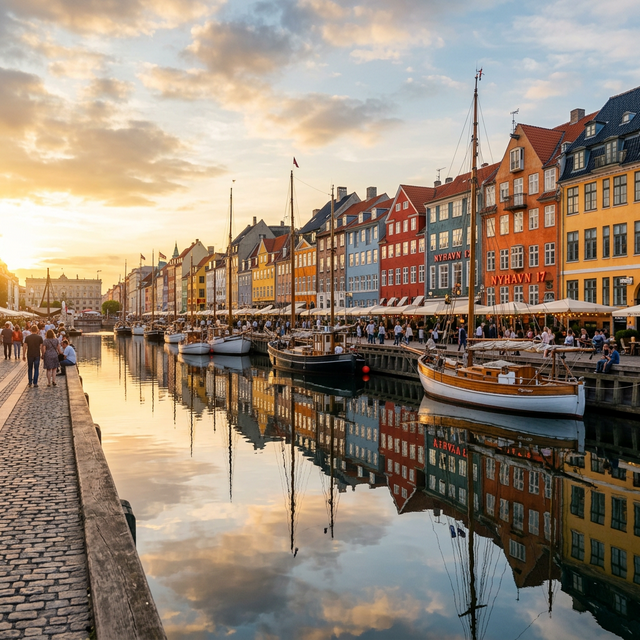
Best Places to Visit in Copenhagen
Planning a destination wedding in Copenhagen? From the colorful Nyhavn harbor to the magical Tivoli Gardens, discover the must-see romantic spots that make Copenhagen the perfect city for your Danish wedding adventure.
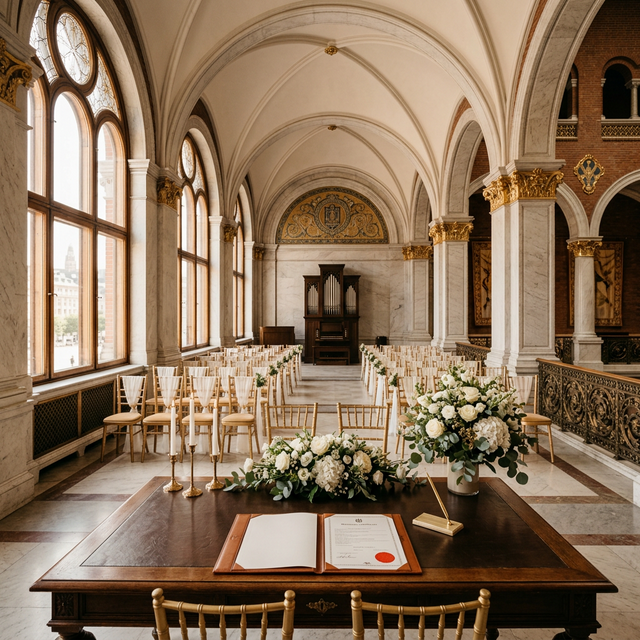
Why Get Married in Denmark?
Discover why thousands of international couples choose Denmark for their wedding each year. Minimal paperwork, fast processing, multilingual ceremonies, and worldwide recognition make getting married in Denmark the smartest choice.
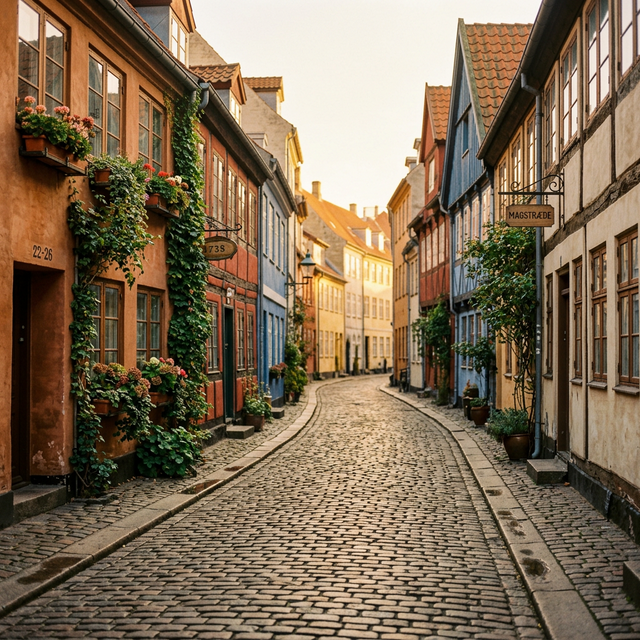
Top 5 Romantic Photo Spots in Copenhagen
Just said 'I do' in Copenhagen? Discover the hidden cobblestone streets, royal gardens, and secret spots where professional photographers capture the most stunning Danish wedding photos.