
Practical, experience-based information reviewed by the Denmark Wedding Services team. This is not legal advice — for legal questions, consult a qualified lawyer.
The Danish Agency of Family Law (Familieretshuset): Processing Time Explained
Short answer: The Danish Agency of Family Law (Familieretshuset) is the authority that reviews international marriage applications and issues the Prøvelsesattest (certificate of marital status) needed to marry. It generally processes complete applications with no missing information in about 5 working days — a general target, not a guarantee; cases needing more information take longer.
Who this guide is for: Couples who want to understand the authority behind their Danish marriage application.
Key points
- Familieretshuset reviews applications and issues the Prøvelsesattest.
- Complete applications: about 5 working days as a general target, not a guarantee.
- The Prøvelsesattest is typically valid for four months once issued.
- Incomplete applications or requests for more information extend the timeline.
Behind every Denmark civil wedding is one institution: Familieretshuset, the Danish Agency of Family Law. It's the body that reviews every marriage application, issues the prøvelsesattest that authorises the ceremony, and handles edge cases like binational documentation, divorce-recognition, and language verification. If you've heard Familieretshuset mentioned in a Denmark-wedding context, this is what it actually does — and what to expect when your file lands on a clerk's desk.
What Familieretshuset Is
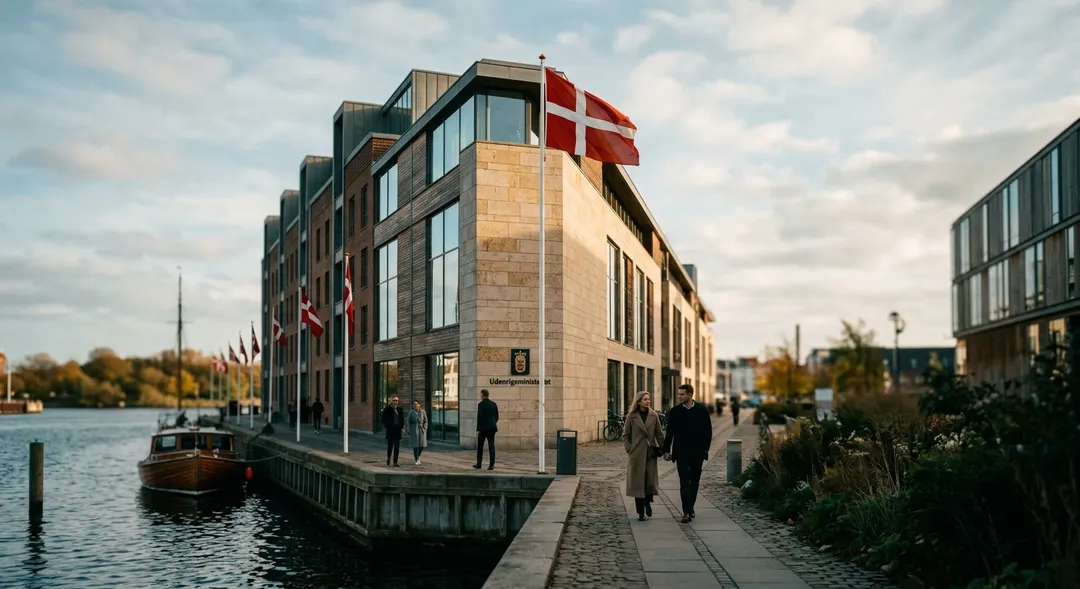
Familieretshuset is a national administrative agency that took over Denmark's family-law functions in 2019. Before that, marriage applications were processed by the Statsforvaltningen (state administration); now everything funnels through one streamlined agency. It is not a court: cases that require a judge (custody disputes, contested divorces) are referred to family courts. For weddings, Familieretshuset is the single decision-maker.
Key Familieretshuset functions relevant to weddings:
- Reviewing marriage applications under the Ægteskabsloven (Marriage Act).
- Issuing the prøvelsesattest — the official statement that you meet Danish marriage requirements.
- Verifying foreign documents (divorce decrees, name-change records, apostilles).
- Recognising foreign divorces for couples who were previously married.
- Confirming legal-entry status for non-EU partners.
Familieretshuset also handles divorce, inheritance, and parental-responsibility cases, but those are separate workflows.
The Marriage Application Process — From Familieretshuset's Side
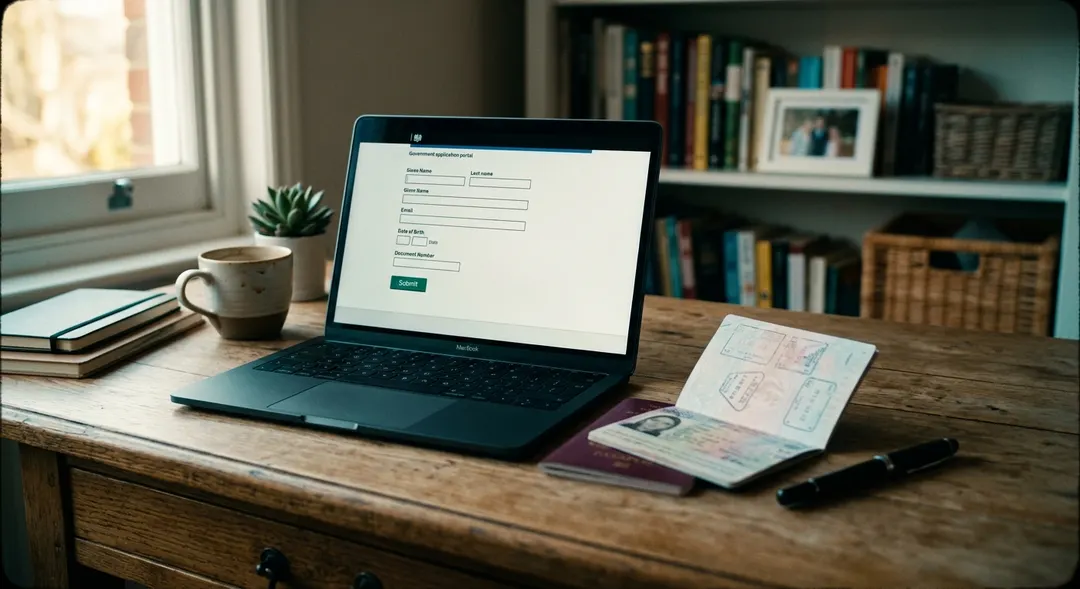
When we submit your application as your legal representative, here's what Familieretshuset does (see the official Familieretshuset — international marriages overview):
1. Intake (Day 1) — A clerk receives the digital file, runs an automated completeness check, and assigns a case number. 2. Document review (Days 2–4) — Clerk verifies passport scans, divorce decrees, apostilles, and any foreign-language documents. They have direct access to most EU civil-registry databases for cross-checks. 3. Foreign-document verification (Day 3–5) — Documents from non-EU countries get an extra layer of authenticity review. This is where apostilled divorce decrees from Russia, India, or the US get scrutinised. 4. Approval or query (Day 4–5) — Either the prøvelsesattest is issued, or the clerk emails us with a question. We handle the response within hours. 5. Issuance (Day 5) — Approval document sent to us digitally. We confirm with the chosen town hall.
The 5-working-day target is a general target for complete applications with no missing information, not a guarantee. Clean documents sometimes clear faster; cases where an apostille needs additional verification take longer.
What Familieretshuset Actually Checks
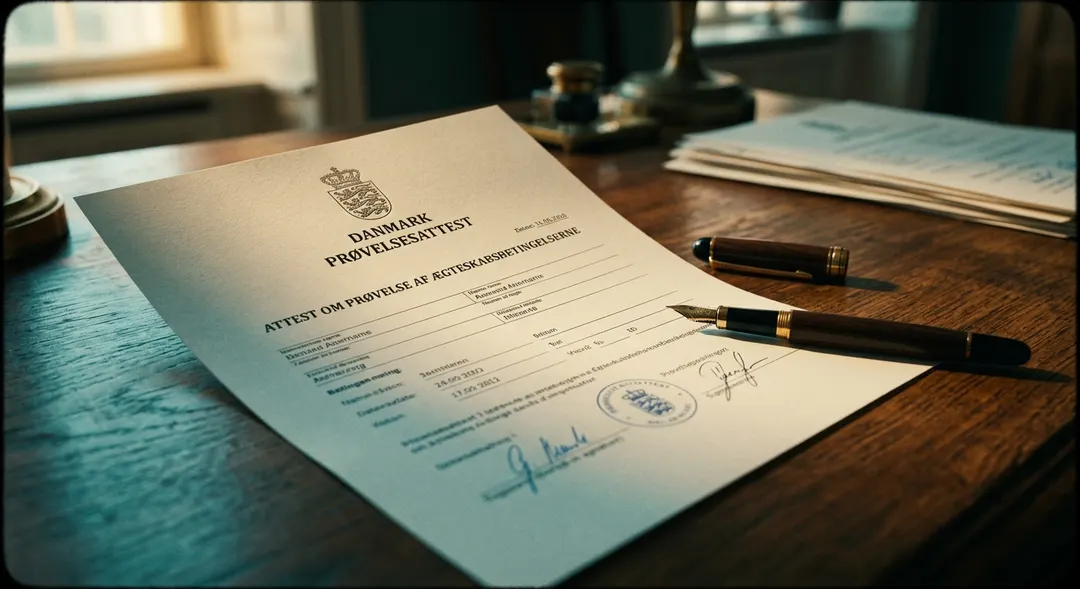
A non-exhaustive list of what a Familieretshuset clerk verifies:
- Both partners are 18+ (passport date of birth).
- Both partners are legally single (passport name match against divorce decrees, death certificates, or first-marriage status).
- Both partners can legally enter Denmark (visa, residence permit, or visa-free nationality).
- If divorced: the divorce is final, is from a recognised jurisdiction, and is properly translated/apostilled.
- If widowed: death certificate is authentic and apostilled where required.
- Names match across documents (a major reason for delays — see below).
- Power-of-attorney to a legal representative (us) is properly drafted.
The Single Biggest Reason for Delays: Name Mismatches
In our experience, the most common reason for follow-up queries from Familieretshuset is names not matching across documents. Examples:
- A Russian woman whose passport shows the transliterated name "Anna Smirnova" but whose Russian divorce decree shows "Анна Смирнова" — we add a transliteration certificate.
- An Indian partner whose middle name appears on the passport but not the apostilled birth/divorce record — we add a name-equivalence statement.
- A US partner whose maiden name appears on a divorce decree but whose current passport shows a remarried name — we sequence the documents to show the chain.
We pre-check every document for name consistency before submission. Some cases need an extra clarifying document; we handle this without bothering you about it.
Foreign-Divorce Recognition
If either partner was previously married, Familieretshuset needs to confirm the divorce is final and recognised in Denmark. The recognition rules:
- EU divorces (Brussels II Regulation) — Automatically recognised. No extra step needed.
- UK divorces — Recognised by treaty. Require apostilled decree absolute.
- US divorces — Recognised on a state-by-state basis with apostille from the relevant Secretary of State.
- Russian, Indian, Chinese, Brazilian divorces — Recognised when properly apostilled and translated.
- Iranian, Syrian, and a few other religious-court divorces — Reviewed case by case; usually accepted with proper consular legalisation.
For the deeper apostille and legalisation rules, see our apostille guide.
When Familieretshuset Says No
Refusals are uncommon. The handful of legitimate refusal grounds:
- Documents indicate one partner is not legally single — typically a partner who didn't realise an old divorce wasn't fully finalised in their home jurisdiction.
- Forced or sham marriage suspicion — Familieretshuset has anti-fraud responsibilities and may interview both partners by video if patterns suggest a sham marriage. Genuine couples answering normal questions sail through; this isn't a hurdle for legitimate weddings.
- Both partners under 18 — Denmark does not permit underage marriage at all.
- Existing marriage in another jurisdiction — A legally subsisting marriage anywhere blocks a new marriage everywhere.
What *is not* a refusal ground (despite occasional folk myths):
- Different nationalities — fully accepted, see our binational couple guide.
- Same-sex couples — fully accepted, see our same-sex marriage in Denmark guide.
- Big age gap between partners — not a ground for refusal.
- Either partner having been refused a Schengen visa in the past — past refusals don't block a current marriage if entry status is currently valid.
- Pregnancy of one partner — not relevant to Familieretshuset's review.
Communication With Familieretshuset
We handle all Familieretshuset communication for our couples. You will not personally interact with the agency unless something unusual arises (a video interview, very rare). Specifically:
- You communicate with us through our app or email/WhatsApp.
- We communicate with Familieretshuset through their secure portal.
- Familieretshuset responds to us, we relay to you.
This means questions about your case status ("is it approved yet?") come to us in real time — most updates land in your DWS app within 1 hour of Familieretshuset's response.
An Edge-Case Walkthrough
Consider a typical non-Hague edge case: an Austrian and Iranian-born couple where the Iranian partner has a religious-court divorce from Tehran. The divorce decree is authentic but in Farsi, with an Iranian Ministry of Foreign Affairs stamp instead of an apostille (Iran is not a Hague Convention member). The standard pathway: we coordinate a Danish-embassy authentication of the Tehran document, then a sworn Farsi-to-Danish translation via a Danish state translator. Familieretshuset's specialist clerks review the legalised, translated decree — a non-Hague case like this typically takes longer than the general 5-working-day target, but it is well within reasonable expectations.
This kind of case — multiple jurisdictions, religious-court documents, non-Hague country — is what Familieretshuset specifically exists to handle. They're more flexible than couples expect.
Familieretshuset's Hours and Holidays
Familieretshuset operates Monday–Friday during normal Danish business hours. Closed on:
- Public holidays (~12 per year, including 5-day Easter window and Christmas/New Year).
- Constitution Day (June 5) afternoon.
Avoid submitting applications the week before Christmas if you want a ceremony in early January — the Familieretshuset calendar tightens. We auto-detect these windows and adjust target ceremony dates accordingly.
Cost of Familieretshuset Processing
All Danish authority fees connected with the marriage application are included in our Comfort Package (€799.00) — there is no separate government fee for the customer to pay on top. Fees for documents you obtain in your home country (apostilles, translations) are separate. See our transparent 2026 cost breakdown for the full picture.
Why Denmark Centralises This vs Distributed Standesamt Models
Germany's Standesamt model has every municipality reviewing its own applications, leading to inconsistent rules and timelines. Denmark's centralised Familieretshuset model means:
- Same standards applied to every couple regardless of which town hall hosts the ceremony.
- Specialist clerks for tricky areas (Iran, Russia, India, US) who see many cases a year.
- A single decision authority — no risk of "the Standesamt in city X is friendlier than in city Y."
This is why our step-by-step guide maps clean predictable steps. The system is built to be predictable.
Wrapping Up
Familieretshuset is the calm, professional, English-speaking authority that makes Denmark's roughly 5-working-day wedding timeline possible for complete applications. Most couples never hear from them directly — they see only the prøvelsesattest at the end of the review. That's by design, and it's a feature of why so many international couples choose Denmark over more bureaucratic alternatives. Denmark Wedding Services acts as a recognised legal representative, which lets us submit, track, and resolve cases on your behalf without you needing to navigate the agency yourself.
Related guide: How to get married in Denmark fast — complete timeline
Familieretshuset — The Danish Agency of Family Law
Why it is one agency, not a court — and why that matters for your case
A structural point the main guide does not spell out: Familieretshuset was formed in 2019 by merging Statsforvaltningen and Familieretten into a single administrative agency, and it is deliberately not a court. Contested matters that need a judge are split off to the family courts; your marriage approval stays on the fast administrative track, which is precisely why a clean application is decided in days rather than the weeks a court process would take. Source: https://familieretshuset.dk/familieretshuset/en/your-life-situation/your-life-situation/international-marriages/
The portal mechanics the main guide skips
The hands-on detail not in the main guide: international couples log in to the familieretshuset.dk portal with a guest account (not Danish MitID, which only residents hold), documents are accepted as PDF scans only, and both partners sign electronically. Knowing the format up front avoids the classic stumble — photos or JPEGs that the portal rejects. With DWS coaching, the on-portal time is typically under an hour.
- Account: guest account for international couples (Danish MitID is for residents)
- Document upload: PDF scans only — JPEGs/photos get rejected
- Electronic signatures required from both partners
FAQs About Familieretshuset
Can we contact Familieretshuset directly with questions?
Yes — Familieretshuset has a public information line and email support, but they answer general procedural questions only. For case-specific questions (your individual application status, document clarification requests, timeline updates), you contact them through the application portal's messaging system. DWS clients communicate with Familieretshuset on their behalf as authorised representatives, which reduces back-and-forth and ensures responses are submitted within the 24-hour window that protects the 5-day clock.
How does Familieretshuset compare to family-law authorities in other EU countries?
Familieretshuset is significantly more efficient than equivalent EU authorities. German Standesamt requires multiple in-person appointments and 6-12 weeks of processing. French Mairie requires 30-day in-country notice. Italian Comune requires 3+ days physical presence. Familieretshuset generally processes complete applications with no missing information in about 5 working days (a general target, not a guarantee) and has no in-person requirements until the ceremony itself. This efficiency is a key reason Denmark is a popular choice for international couples in Europe.
Sources
Ready to Start Your Danish Wedding?
Fill out our free checklist in just 10 minutes — we'll send you a personalized document list and guide you through every step.
Helpful Resources
Related Articles
Documents You Need for a Danish Wedding
The complete 2026 guide to wedding documents in Denmark. Learn exactly which papers you need, what's NOT required (you'll be surprised!), and how to prepare everything for a stress-free marriage application.
How Much Does a Wedding in Denmark Cost?
How much does a wedding in Denmark really cost in 2026? A transparent, itemised breakdown — the €799.00 all-in service fee plus travel, accommodation and extras. No hidden charges, no surprises.

Best Time of Year to Get Married in Denmark
Spring blossoms, midsummer light, autumn gold, or a snowy December? An honest, month-by-month guide to picking the best season for your Denmark wedding — weather, light, ceremony availability, and prices.